
Kerbing a wheel in these streets is close to a rite of passage, and most of the time the damage stops at the alloy. What people struggle with is the boundary. The rim rash you can see is on metal, and metal does not deflate. The real question is whether the tyre behind it got pinched between the rim and the kerb at the same moment, because that is a different sort of damage and it hides in the shape of the sidewall rather than on its surface.
So two things happen when the fitter arrives. The wall gets looked at for anything raised, and then pressed all the way round for a soft spot where the cords should be holding firm. After that the bead area gets a look, where the tyre seals against the rim, because a hard sideways hit can distort the seat and let air out slowly. Most cars seen after a kerbing keep their tyre and lose nothing but paint. When they do not, you are told exactly what has failed and why, with the tyre in front of you.
Kerbing an alloy on a tight street or dropping a wheel into a pothole on Notting Hill Gate does not always announce itself. The tyre holds air, the car drives, and the damage only shows when you crouch down and look: a gouge, a split, a bulge sitting proud of the sidewall. A Ladbroke Grove cul-de-sac or a Portobello Road main road, tell us which. A tight terrace in Kensington Park Road or a narrow bay on Portobello Road is usually workable.
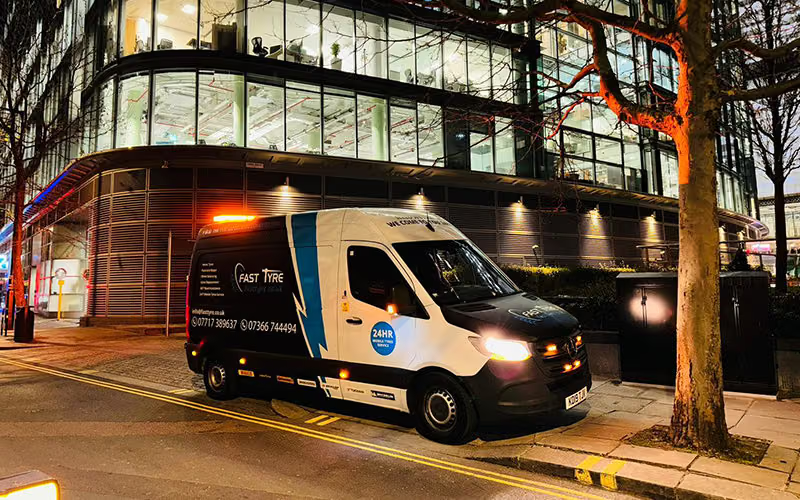
Broken tyre replacement in Notting Hill is part of our wider mobile 24-hour emergency callout cover. For broken tyre replacement in Notting Hill, call 07717 389637 or send us your details for a price.
The narrow turnings around Notting Hill Gate produce a steady supply of kerbed wheels, and the useful thing is knowing which of them matter. A marked alloy is a cosmetic problem you can live with for years. A pinched sidewall is a structural one you cannot live with at all. The verdict is given at the kerb with the evidence in hand, and there is nothing riding on hearing that the tyre is sound.
A wheel scraped along a kerb near Kensington Park Road looked dreadful and measured perfect. Rubber off the surface, structure untouched, nothing needed and nothing sold.
A car hit a kerb square on a turning off Ladbroke Grove. The alloy was barely marked and the inner sidewall carried a small raised area. That one had to be replaced.
A tyre in Lansdowne started dropping pressure a week after a hard bump. The bead seat had been knocked out of shape against the rim. It was the impact, not a nail.
Usually not. Rim damage and tyre damage are separate questions, and the second one is answered by feeling round the sidewall rather than by looking at the metal.
Anything that is not smooth and even: a raised band, a dip, a soft patch, or a place where the surface of the rubber has changed character. Find one of those and stop driving on it.
It can. If the bead is knocked out of shape against the rim, air escapes where the tyre seals rather than through a hole. It looks exactly like a puncture and is not one.
Often. Telling somebody their tyre is sound is the most common outcome of a damage call, and it is why people ring again.
That is the whole idea. The car stays in its bay in W11 and the assessment happens there, with a replacement coming off the van only if it turns out to be needed.
★★★★★ 4.9 from 151 verified Google reviews.
Read all 151 reviews on Google →Prefer a callback? Send your details for a broken tyre replacement price in Notting Hill.