
Key takeaways
- Most 4x4s and SUVs are used on tarmac, so road (highway) tyres are the right choice for the majority of owners.
- All-terrain tyres trade some road comfort and grip for off-road ability; mud-terrain tyres are noisy and only worth it for serious off-roading.
- On 4WD and AWD vehicles, fit tyres as matching sets, mixing sizes or worn and new tyres can damage the differential and transfer case.
- SUVs are heavy, so always fit tyres with the correct load index and speed rating for your vehicle, never a lighter car tyre.
SUVs and 4x4s are now the most popular cars on UK roads, but their tyres are a different proposition from an ordinary hatchback. They are heavier, sit higher, often have four-wheel drive, and they come with a genuine choice between road, all-terrain and mud-terrain rubber. Choosing the wrong type costs you in grip, noise, fuel and sometimes expensive mechanical damage. This guide explains the differences and how to pick well.
What are the three main types of 4x4 tyre?
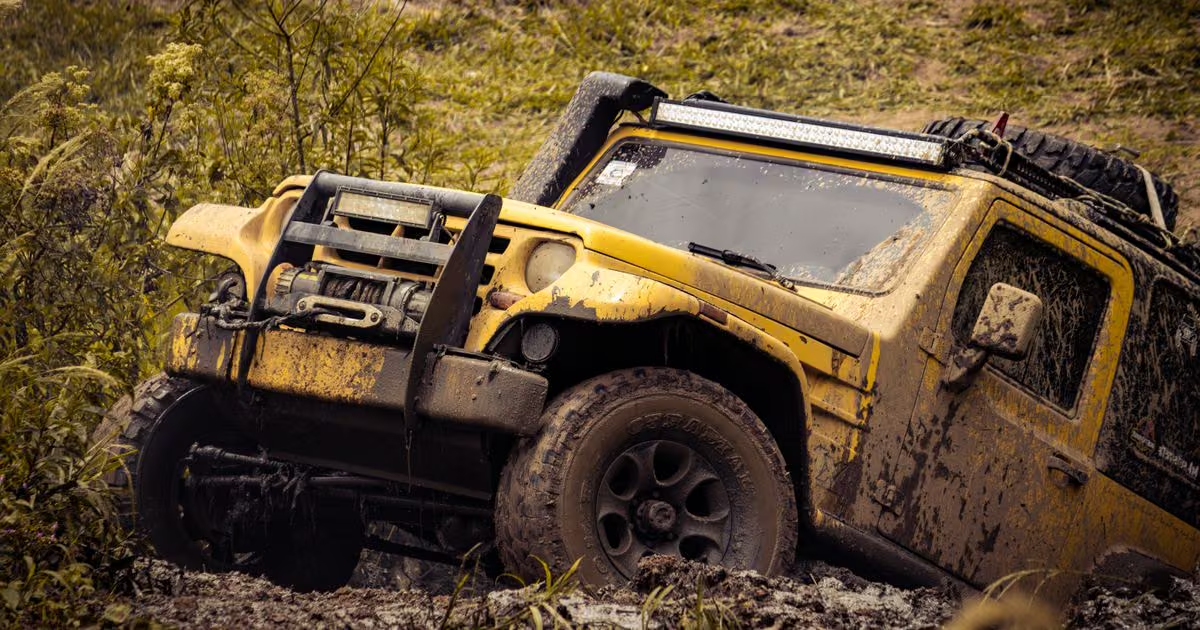
There are three broad categories: road (also called highway or H/T) tyres for everyday tarmac use, all-terrain (A/T) tyres that balance road manners with some off-road grip, and mud-terrain (M/T) tyres built for deep mud and rock with aggressive, chunky blocks. The right choice depends almost entirely on where you actually drive, not where you imagine you might.
| Type | Best for | Trade-offs |
|---|---|---|
| Road / Highway (H/T) | Daily tarmac, motorways, towing | Limited grip on mud or loose ground |
| All-terrain (A/T) | Mixed road and occasional off-road or green lanes | Slightly noisier, shorter road life, more fuel |
| Mud-terrain (M/T) | Serious off-roading, deep mud, farm and site use | Loud, thirsty, weaker wet road grip |
For the overwhelming majority of SUV owners who never leave the tarmac, a quality road tyre is quieter, lasts longer, grips better in the wet and uses less fuel.
Do you really need all-terrain or mud-terrain tyres?
Probably not. All-terrain tyres only earn their keep if you regularly drive on green lanes, muddy tracks, gravel or snow-covered rural roads. Mud-terrain tyres make sense for farming, forestry, recovery or off-road sport, but they are noisy and reduce wet braking on the road, so they are the wrong choice for a school-run SUV.
It helps to be honest about your driving. A few weekends a year on a campsite track do not require aggressive off-road rubber. If you genuinely split your time between tarmac and rough ground, a modern all-terrain with the 3PMSF (three-peak mountain snowflake) marking is a sensible all-rounder that also handles winter conditions.
Why must 4WD and AWD tyres match?
On four-wheel-drive and all-wheel-drive vehicles, all four tyres should be the same make, size, tread pattern and wear level. The drivetrain assumes every wheel turns at the same rate. If one tyre is a different size or much more worn, its rolling circumference differs, the system senses a permanent speed mismatch, and that can overheat and damage the differential, viscous coupling or transfer case.
This is very different from a two-wheel-drive car, where replacing in axle pairs is usually fine. When in doubt, follow the vehicle handbook, as some manufacturers specify a maximum tread difference between axles.
Why do load and speed ratings matter more on an SUV?
SUVs and 4x4s are heavy, so their tyres carry more weight than a typical car tyre. Fitting a tyre with too low a load index can cause overheating and failure, especially when fully loaded or towing. Always match or exceed the load index and speed rating shown in your vehicle handbook or on the door-pillar placard.
Many large SUVs use reinforced tyres marked XL (extra load). Some also specify manufacturer-approved tyres with codes such as N0 (Porsche), MO (Mercedes) or * (BMW), which are tuned for that vehicle. If your car came with these, sticking to them keeps the handling as intended. To decode the sidewall, see our guide on what the numbers on your tyre mean.
How long do 4x4 and SUV tyres last?
It depends on type and driving, but expect road SUV tyres to last broadly like car tyres, while all-terrain and especially mud-terrain tyres wear faster on tarmac. The extra weight of an SUV, plus higher cornering loads, tends to shorten life compared with a small hatchback, so regular rotation and correct pressures matter even more.
- Keep pressures right, heavy vehicles punish under-inflation; check monthly and before towing.
- Rotate regularly, front and rear wear differs; rotation evens it out (on non-directional sets).
- Check alignment, kerbs and potholes knock heavy SUVs out of true, causing edge wear.
- Watch the load, roof boxes, towing and full boots all add stress.
For more, read how to make your tyres last longer and learn to spot trouble early with tyre wear patterns.
What about all-season tyres for an SUV?
All-season tyres are a strong middle-ground choice for many UK SUV owners who never go off-road but want better cold-weather grip than a summer tyre, without the hassle of swapping seasonal sets. They use a compound and tread designed to cope with both warm and cold conditions, and many carry the 3PMSF snowflake marking for genuine winter capability.
They are not a do-everything tyre: a dedicated summer tyre still grips slightly better in the heat, and a true winter tyre is better in deep snow and ice. But for a family SUV used on tarmac in a climate that rarely sees extreme conditions, a quality all-season tyre is a sensible, low-maintenance option. Our guide on all-season vs summer vs winter tyres compares them in detail.
Getting the right SUV tyres fitted
Choosing the correct type, size, load index and matching set for a 4x4 is more involved than for a small car, and getting it wrong can be costly. Fast Tyre supplies and fits road and all-terrain tyres for SUVs and 4x4s across London and central England. Our mobile tyre fitting service comes to your home or work, usually within 30 to 60 minutes, so a heavy vehicle never has to be driven on the wrong rubber.
Frequently asked questions
Yes, all-terrain tyres are road legal and safe on tarmac, but they tend to be noisier, use slightly more fuel and offer a little less wet grip than dedicated road tyres. For mostly on-road driving, highway tyres are usually the better all-round choice.
Only if they meet your vehicle's required size, load index and speed rating. SUVs are heavy, so fitting an under-rated car tyre risks overheating and failure. Always match the handbook or door-pillar specification, including any XL (extra load) requirement.
On four-wheel-drive and all-wheel-drive vehicles it is usually safest to replace all four together so rolling circumferences match. Mismatched or differently worn tyres can damage the differential or transfer case. Two-wheel-drive SUVs can normally be replaced in axle pairs.
The three-peak mountain snowflake (3PMSF) means the tyre has passed a snow-traction test and performs in winter and on snow. Many all-terrain tyres carry it, making them a useful year-round option for rural drivers who face cold, snowy conditions.
Larger alloys with low-profile tyres look good but give a firmer ride and offer less protection against potholes and kerb damage. The thinner sidewall is easier to crack or buckle, so they need more careful driving on poor urban roads.