
Key takeaways
- The UK legal minimum tyre tread depth is 1.6mm across the central three-quarters of the tyre, all the way around.
- The 20p test is the quickest home check: if the outer band of a 20p coin is hidden in the tread, you are likely above 1.6mm.
- Driving on an illegal tyre risks a fine of up to £2,500 and 3 penalty points, per tyre.
- Most tyre and safety bodies recommend replacing at 3mm, not waiting for 1.6mm, because wet grip drops off sharply below 3mm.
Checking your tyre tread depth takes about two minutes and needs nothing more than a 20p coin. Tread is what clears water from the road and keeps you gripping in the wet, so once it wears down your stopping distances grow and your car is both more dangerous and illegal. This guide shows you three ways to check it and exactly when to replace.
What is the legal tyre tread depth in the UK?
The legal minimum tyre tread depth in the UK is 1.6mm, measured across the central three-quarters of the tread and around the entire circumference of the tyre. This applies to cars, vans and light trailers and is set out in the Highway Code (rule 89) and the Road Vehicles (Construction and Use) Regulations. Below 1.6mm the tyre is illegal to use on the road.
It is worth knowing that the limit is not just at one point. If any part of that central band drops below 1.6mm, anywhere around the tyre, it fails, which is why checking in several places matters.
How to do the 20p tread depth test
The 20p test is the simplest home check and is recommended by tyre-safety charity TyreSafe. Insert a 20p coin into the main tread grooves: if the outer rim of the coin is hidden by the tread, your depth is likely above the legal limit. If you can see the rim, your tyre may be illegal and should be checked by a professional.
- Take a 20p coin and push it into the deepest part of a main groove.
- Look at whether the outer band (the smooth raised edge) of the coin disappears into the tread.
- If you can see the band, the tread is getting low, get the tyre checked.
- Repeat at the inner, middle and outer grooves, and at three points around the tyre.
- Do this on all four tyres, they rarely wear at the same rate.
When should you replace your tyres?
While 1.6mm is the legal floor, most tyre manufacturers and safety organisations recommend replacing tyres at around 3mm. Independent testing has repeatedly shown that wet braking and aquaplaning resistance fall away noticeably once tread drops below 3mm, so the last 1.4mm of "legal" tread is also the least safe.
Other signs your tyres need attention
Tread depth is the headline check, but a 60-second look can reveal other problems that make a tyre unsafe regardless of how much tread is left. Look for these as you go around the car:
- Uneven wear, more wear on one edge than the other usually means alignment or pressure issues.
- Cracks or bulges in the sidewall, a bulge is a sign of internal damage and means the tyre should be replaced immediately.
- Cuts, lumps or embedded objects, a nail or screw may be causing a slow puncture.
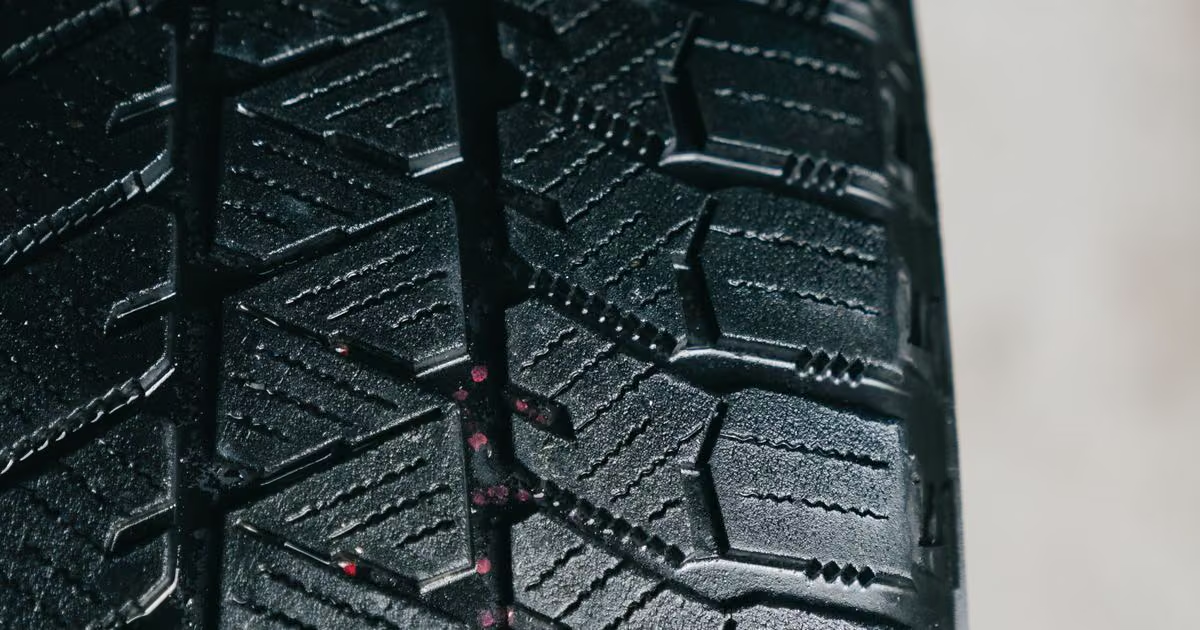
- The wear indicators, small raised bars sit in the grooves at 1.6mm. If the tread is level with them, the tyre is at the legal limit.
What does it cost if you ignore it?
Driving with a tyre below 1.6mm is an offence carrying a fine of up to £2,500 and 3 penalty points per tyre, according to gov.uk. In the worst case, four illegal tyres, that is up to £10,000 and 12 points, enough to lose your licence. It is also one of the most common MOT failure items, so it is cheaper and safer to catch it early.
| Tread depth | Status | What to do |
|---|---|---|
| 3mm and above | Healthy | Keep monitoring monthly |
| 1.6mm to 3mm | Legal but worn | Plan a replacement soon |
| Below 1.6mm | Illegal & unsafe | Replace before driving |
Found a tyre below the limit?
If a tyre is at or below 1.6mm, you should not keep driving on it. Rather than risk a worn tyre on the way to a garage, our mobile tyre fitting service brings new tyres to your home, work or the roadside across London and central England, usually within 30 to 60 minutes, and fits them on the spot. If you are unsure whether a tyre is legal, send us a photo on WhatsApp and we will tell you straight.
Frequently asked questions
It is a reliable quick check: if the coin's outer band is hidden, you are likely above 1.6mm. For an exact reading use a tread-depth gauge or ask a fitter to measure it. Treat the 20p test as a prompt to get a proper check, not a final verdict.
At least once a month and before any long journey. Tyres wear gradually, and a quick monthly check means you spot a problem before it becomes an MOT failure or a safety risk.
No. Front tyres on most cars wear faster because they handle steering and much of the braking and (on front-wheel-drive cars) the power. Always check all four, as they can be very different.
Yes, but it is usually best to replace tyres in pairs across an axle so grip is balanced. We will give you honest advice on whether one or two is the safer choice for your car.
For most light vans (cars and light goods vehicles) the legal minimum is also 1.6mm across the central three-quarters. Some larger commercial vehicles have a 1mm requirement, but for typical work vans treat 1.6mm as the limit.