
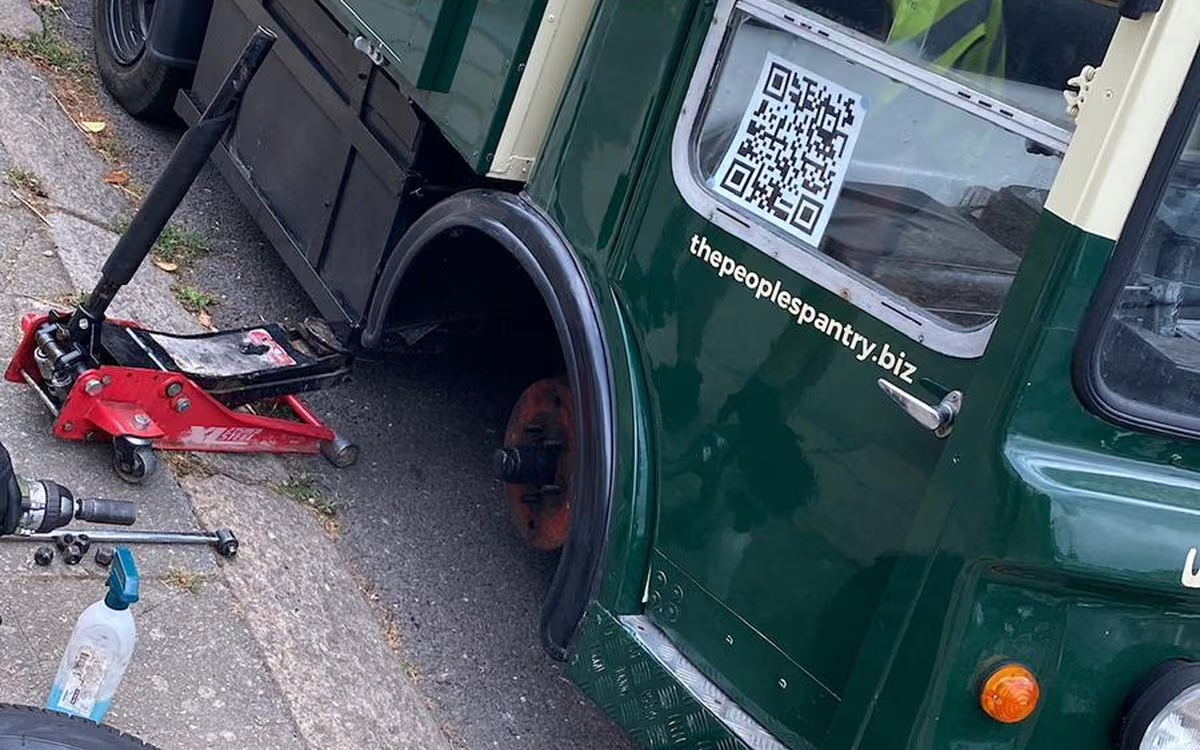
Burst Tyre Replacement in Angel
Under inflation gets all the attention and over inflation gets almost none, which is unfortunate, because the failure it causes arrives with less warning.
Mobile burst tyre replacement across Angel
Around Angel that matters more than it should, because the junction and the roads feeding it are heavily patched and carry speed bumps on the residential side. Those are exactly the edges an over inflated tyre cannot cope with. People arrive at the problem honestly, usually by adding a few extra pounds before a long run, or by setting all four to whatever the air line was already reading. The placard figure is not a minimum to be improved on. It is the pressure the car was developed around, and going well over it makes the ride harsher and the tyre more fragile at the same time.
Get yourself somewhere safe first, and only then start ringing anybody. That means as far off the carriageway as you can get, hazards on, and everybody out on the far side of the car. Do not stand between the car and moving traffic and do not try to change a wheel on a live road. Once you are clear, one call gets a fully-equipped technician heading to your exact spot with a replacement already on board, and a live ETA from the moment the van moves. Typical arrival is 30 to 60 minutes, for cars, SUVs and 4x4s. We reach N1 day and night, 365 days a year.
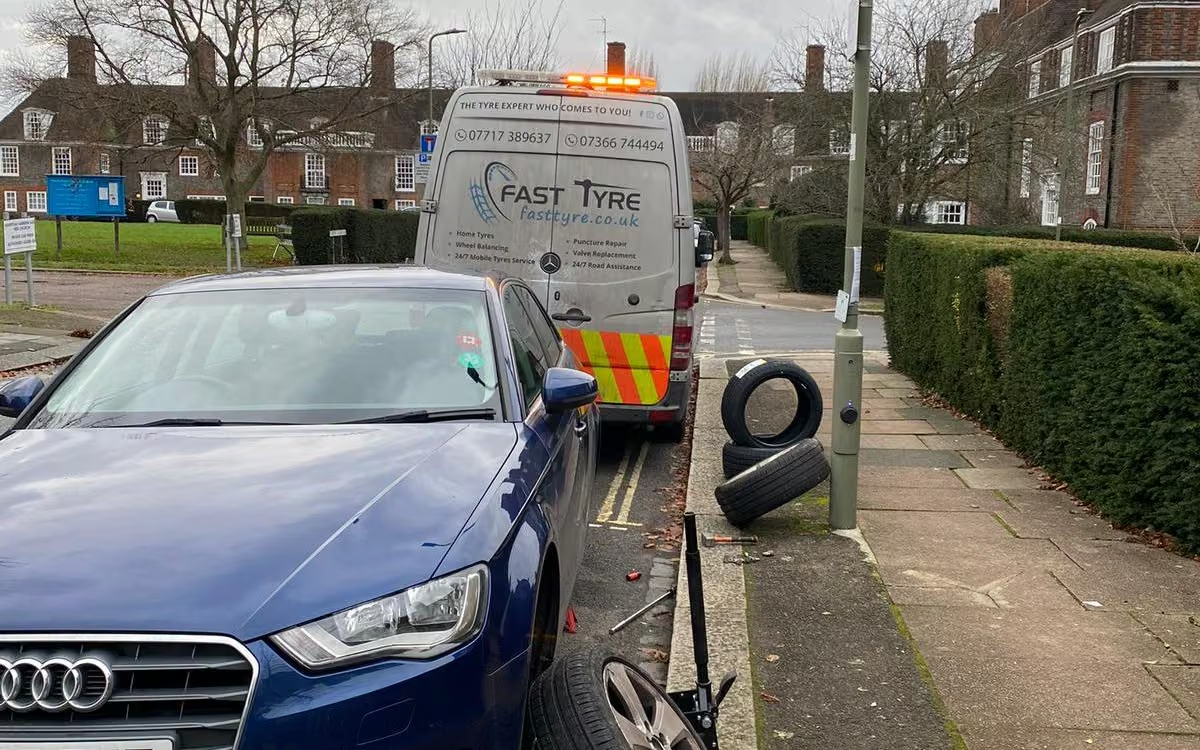
What you get with our burst tyre replacement in Angel
- From Duncan Terrace area to the fastest road nearby, blowouts get priority
- Loaded before we leave, so Greater London jobs finish first time
- Roadside and hard-shoulder fitting here as in Canonbury and Pentonville
- Whichever of the three you drive, the van is equipped for it
- Live ETA from the moment the van sets off
- 2am on Upper Street or the middle of a Sunday, the line is answered
Burst tyre replacement in Angel is part of our wider 24-hour emergency callout across London and the home counties cover. For burst tyre replacement in Angel, call 07717 389637 or get a price for your tyre.
Local knowledge across Angel
The Angel junction and the roads running into it are among the most heavily patched surfaces in inner north London, and the side streets add speed bumps on top of that. It is a landscape built around absorbing, which means it punishes a rigid tyre. If you have been running a few extra pounds because it felt like a sensible precaution, this is a part of town where quietly it is not. Setting the pressures cold to the door plate costs nothing and changes how the car copes with every edge it meets.
Burst Tyre Replacement call-outs we handle in Angel
Split on a patched surface
A car running well above its placard pressures split a tyre on a made good section near the Pentonville Road. At the correct pressure that same edge would very likely have been absorbed.
All four set to one figure
A driver had inflated everything to a single number off an air line rather than to the car's own figures. Front and rear wanted different pressures and neither of them got the right one.
Reset to the door plate
After a failure off City Road the remaining three were set to the placard figures cold, and we showed the owner where the plate lives. That is a conversation worth having once.
What Angel drivers say about our burst tyre replacement
★★★★★ 4.9 · based on 155 Google reviews
I was broken down in the middle of the A406, late at night. I called and they arrived within 15 minutes. Very fast and amazing service, and a kind, friendly gentleman got me moving quickly.
Google review
Called at 10am, the fitter arrived with Bridgestone tyres at 10:45am and was finished by 11:15am. Very reasonably priced and great communication, would definitely use again.
Google review
Absolutely amazing service. They turned up promptly and got the wheel changed within 20 minutes. The pricing was also very reasonable and transparent.
Google review
Burst Tyre Replacement in Angel, FAQs
No, it is a different failure rather than a safer one. Low pressure overheats a tyre and kills it slowly. High pressure makes the crown rigid, so an impact splits it instead of being absorbed. The placard figure is the one the car was developed around.
A few pounds above the placard for a fully loaded run is a recognised adjustment and the plate usually lists it. Setting everything to a round number well above the car's figures is where the trouble starts, particularly on square edged and patched surfaces.
No. An impact split cuts through the casing cords rather than making a hole between them, and a tyre with cut cords is finished no matter how tidy the split looks from outside.
The placard in the driver's door shut, which usually gives two sets of figures, normal load and fully loaded. Use the cold figures, before the car has been driven, and set front and rear to their own numbers rather than one figure for all four.
Burst Tyre Replacement in Angel, 24/7
Prefer a callback? Send your details for a burst tyre replacement price in Angel.