
Burst Tyre Replacement in Maida Vale
A puncture in the tread is a small hole through a thick structure, which is why so many of them leak slowly enough to be an inconvenience rather than an event. A valve is the opposite.
Mobile burst tyre replacement across Maida Vale
Stems break for two reasons worth knowing about. The first is age, because a rubber stem that has hardened will crack where it passes through the rim and can part company under the sideways load of a firm kerb strike. The second is whatever has been screwed onto the top of it, since a heavy metal cap on a flexible rubber stem is a weight on the end of a lever, and at speed it works the stem back and forth until it fatigues. A tyre that goes down in seconds without having hit anything is a valve until proven otherwise, and it is the first thing we look at when we get to the car.
Potholes cause more blowouts than speed does. A square hit pinches the sidewall between the road and the rim, and that is the end of the casing. From Maida Vale to Little Venice, any hour. A Warwick Avenue cul-de-sac or a Sutherland Avenue main road, tell us which. A tight terrace in Maida Hill or a narrow bay on Sutherland Avenue is usually workable. The W9 postcode and a street in Little Venice: that is enough.
What you get with our burst tyre replacement in Maida Vale
- Fast dispatch for tyres that have already failed
- No back order and no return trip
- Safe wheel-off and fitting at the roadside or in a lay-by
- A 4x4 stopped on Elgin Avenue gets the same service as a car on a driveway
- You know when we will reach Maida Hill, not just that we are coming
- The same 24-hour cover here as in Paddington and Kilburn
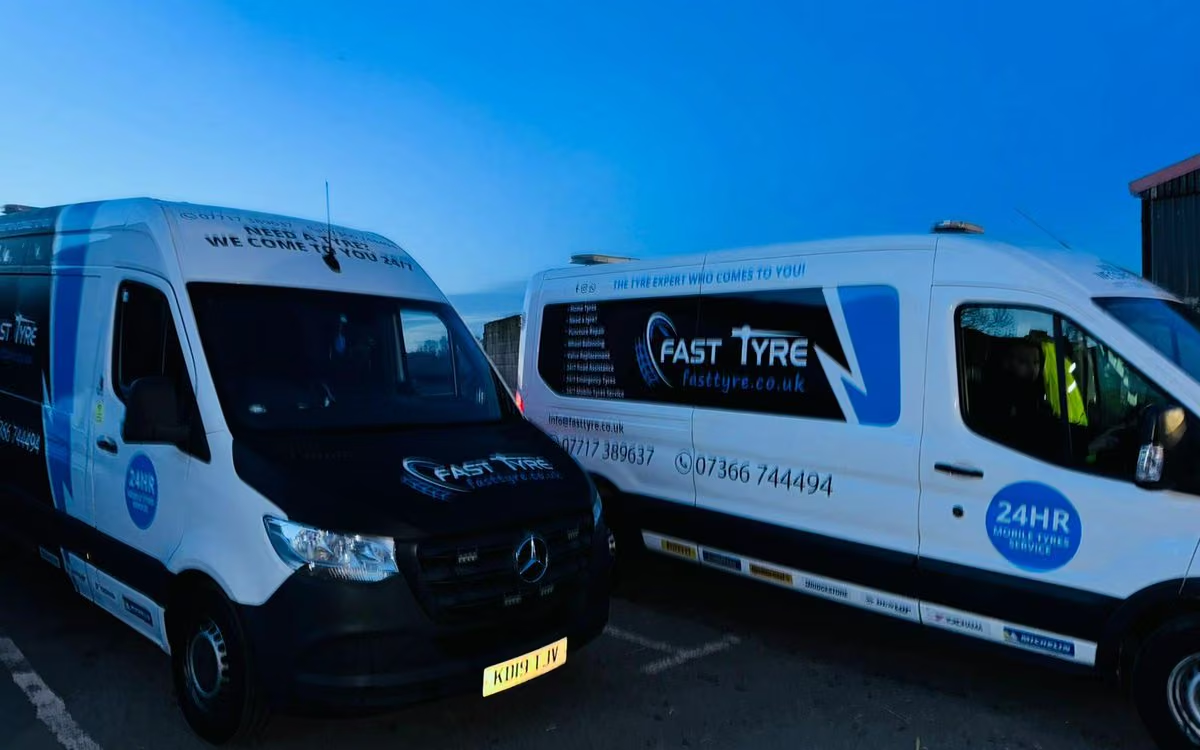
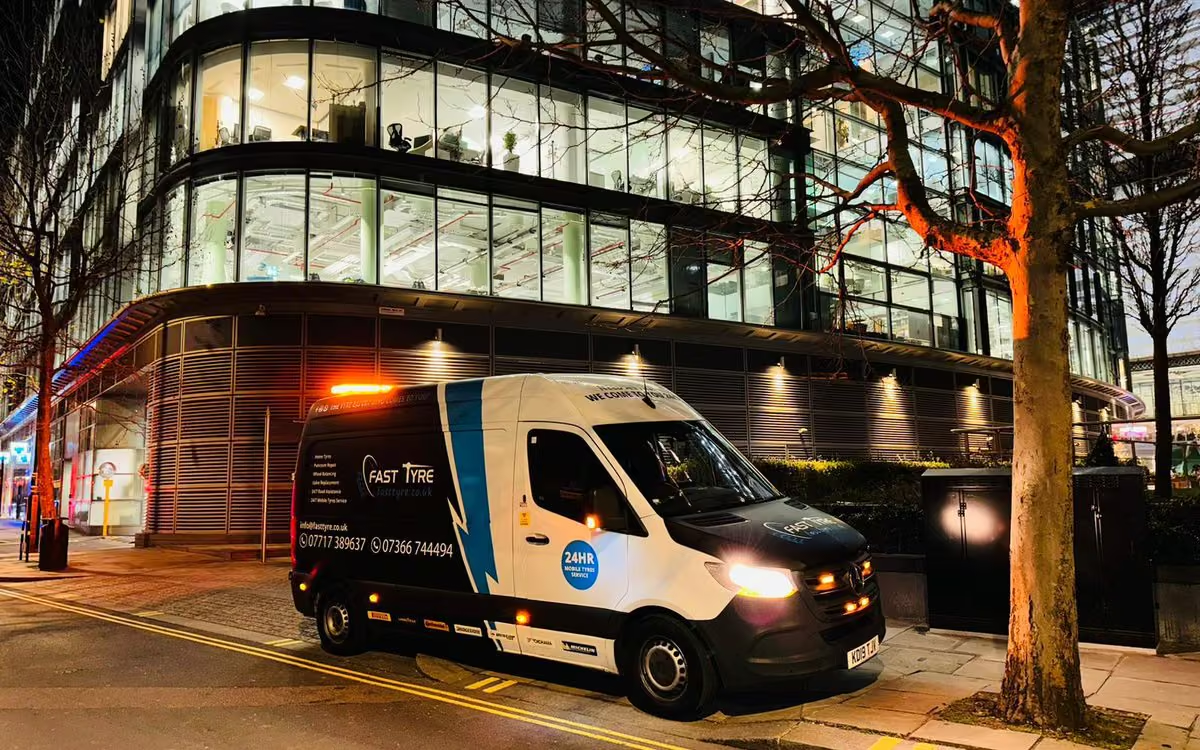
Burst tyre replacement in Maida Vale is part of our wider mobile 24-hour emergency callout cover. For burst tyre replacement in Maida Vale, call 07717 389637 or get a price for your tyre.
Local knowledge across Maida Vale
Getting into a tight residents' bay on the avenues around Elgin Avenue means turning hard against a kerb at low speed, and on most cars it is the face of the wheel nearest that kerb which carries the valve. It is the injury nobody expects, because everybody inspects the alloy for scuffs afterwards and nobody looks at the small rubber stem sitting beside it. If a tyre goes down within an hour of a firm kerb contact and there is nothing to find in the tread, the valve is where to look, and it is not something to drive on while you decide.
Burst Tyre Replacement call-outs we handle in Maida Vale
Down in seconds, tread untouched
A car pulled in off the A5 with a tyre that had emptied almost instantly. Nothing had gone through the tread anywhere. The stem had cracked where it sits in the rim and finally given way under a kerb.
Heavy caps on rubber stems
A set of decorative metal caps had been fitted to a car running standard rubber valves. Two of the four stems showed cracking at the base from the extra weight swinging on them at speed, and both were renewed.
Kerbed into a residents' bay
A driver who scraped a wheel manoeuvring into a bay on Sutherland Avenue lost the tyre not to the damage on the alloy but to the valve, which had taken the impact side on and let go a few minutes later.
What Maida Vale drivers say about our burst tyre replacement
★★★★★ 4.9 · based on 155 Google reviews
Amazing service. Popped my tyre and they were out in 10 minutes with a new tyre and back on the road.
Google review
Quality service and pleasant staff. Accurate arrival time estimation with constant ETA updates.
Google review
Was stuck on the M40. They came very quick and gave me a very good price, arriving within 25 minutes. Very glad I came across this company.
Google review
Burst Tyre Replacement in Maida Vale, FAQs
Effectively at once. The valve is a full bore opening into the tyre, so with the stem gone there is nothing restricting the air at all. That is why a valve failure feels like a blowout from the driver's seat and then looks like nothing whatsoever once the car has stopped.
Hold the wheel firmly and keep the car pointing where it is already going, come off the accelerator without braking hard, and let the speed fall away before steering anywhere. Then get off the carriageway and clear of traffic. Working out the cause comes after the car is stationary and safe.
On a rubber stem they can be. The stem is flexible, and a heavy cap adds mass at the far end of it, which turns every rotation into a small bending cycle. Plastic caps weigh almost nothing and seal just as well. It is a small detail that occasionally matters a great deal.
Yes. The tyre has to come off the rim to reach it, which is the part needing equipment rather than a roadside kit, and all of that travels with us. If the tyre was not driven on while flat, it normally goes straight back on with a new valve in place of the old one.
Burst Tyre Replacement in Maida Vale, 24/7
Prefer a callback? Send your details for a burst tyre replacement price in Maida Vale.