
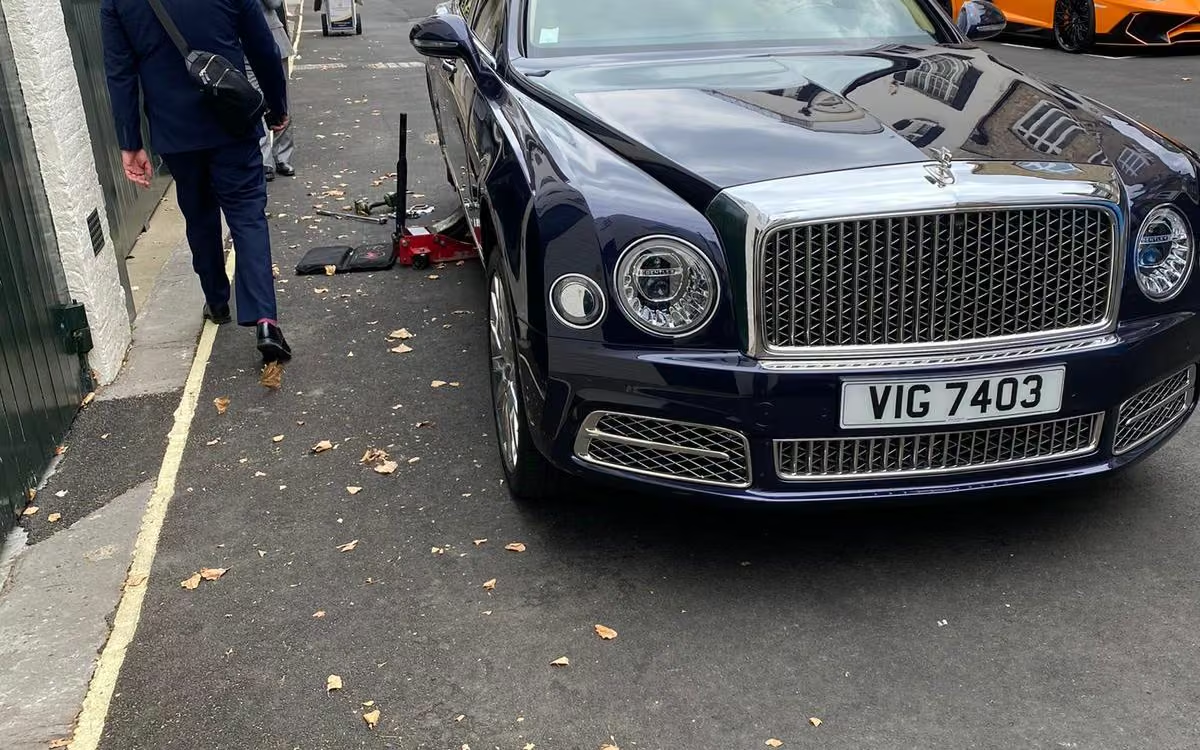
Locking Wheel Nut Removal in Soham
Steel and aluminium do not get on. A locking nut and the stud it screws down onto are steel; the wheel around them is not.
Mobile locking wheel nut removal across Soham
Put water and winter grit into that gap and the two metals set up a slow electrical reaction, and the corrosion it grows takes up more room than the metal it replaced. That is what welds a nut to a stud. Nobody overtightened it. It simply grew tight, quietly, across five or six winters of salt thrown down on the A142 and flung up under the arches.
The key is rarely the first thing to fail, but it is the first thing you notice. It seats, it bites, it turns perhaps a quarter of a turn, and then the splines round off while the nut has not moved at all. After that it becomes a patient job rather than a strong one. Penetrating fluid needs time to travel down the thread, warmth helps on some wheel designs, and the extraction socket goes on a long bar by hand so you can feel the stud beginning to twist before it snaps.
A lost locking wheel nut key is a small problem with a large consequence. The tyre may only need a repair, but if the wheel will not come off the car is going nowhere, and that is a genuinely bad position on the A142. We come out with removal kits made for the job and take the nut off without chewing up the alloy: rusted, rounded, seized or simply done up far too tight by somebody with an impact wrench. Once it is out, the wheel comes off and the tyre work carries on as normal, and we can fit a standard or replacement nut so you are not relying on a missing key again.
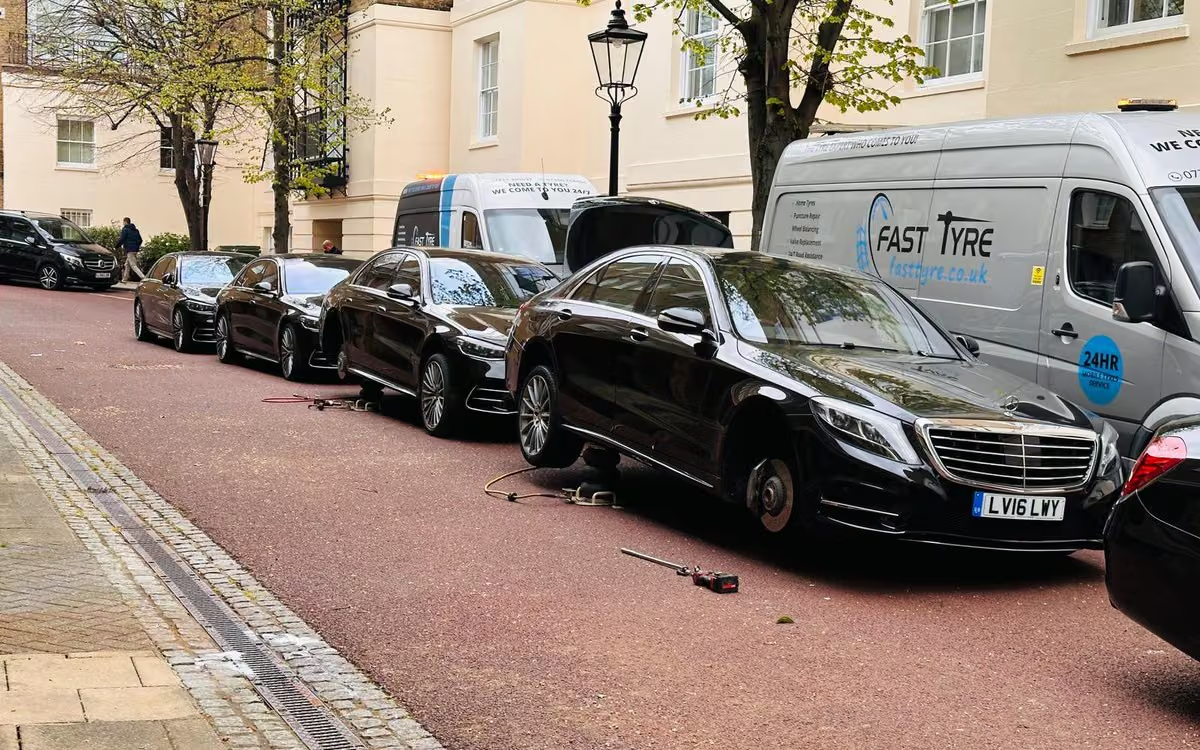
What you get with our locking wheel nut removal in Soham
- Seized, rusted and rounded nuts all come off
- Across Cambridgeshire, a missing key does not stop the wheel coming off
- Care taken with the wheel, not just the nut
- A standard or replacement nut fitted before we leave Qua Fen and Mereside
- Anywhere in Soham, home, work or roadside
- Family cars, SUVs and 4x4s, on one number
Locking wheel nut removal in Soham is part of our wider mobile tyres fitted at home cover. For locking wheel nut removal in Soham, call 07717 389637 or ask us for a quote.
Local knowledge across Soham
Salt is the difference here. Roads through the town and out towards Ely and Newmarket are gritted hard, the wind carries it everywhere, and cars covering those miles sit with wet spray behind the wheels for months at a time. That is what quietly locks a nut onto a stud. If one has beaten you on the drive off Brook Dam Lane, the nearest workshop with the right extractor is a fair drive away.
Typical locking wheel nut removal jobs in Soham
Key bites, nut stays put
This is the usual version of it. The key seats properly, you lean on the bar, and the splines give way before the nut does. We work on what is left of the collar instead, so a chewed key does not end the job.
Service booked for the morning
A mechanic who cannot get a wheel off cannot inspect the brake behind it, and the booking is wasted. Freeing the nut on your own drive the night before means the car goes in ready to be worked on.
Seasonal wheel swap at Mereside
Changing over to a winter set takes twenty minutes across three corners and the best part of an hour on the fourth if one nut has corroded solid. We deal with that corner so the swap is not held up by a single fastener.
What our customers say
★★★★★ 4.9 · based on 155 Google reviews
Excellent service, super fast! I had a rental car and a screw got stuck in the side of the tyre. They sorted it on the spot.
Google review
I was broken down in the middle of the A406, late at night. I called and they arrived within 15 minutes. Very fast and amazing service, and a kind, friendly gentleman got me moving quickly.
Google review
Called at 10am, the fitter arrived with Bridgestone tyres at 10:45am and was finished by 11:15am. Very reasonably priced and great communication, would definitely use again.
Google review
Locking Wheel Nut Removal in Soham, FAQs
It can happen on a nut that has corroded that hard, and it turns half an hour of work into a hub-off repair at a garage. That is exactly why we go slowly. If a stud starts to feel like it is going, we stop and say so before pushing it further.
No. The key only makes it quicker. Our sockets bite into the outside of the nut itself, so whether yours was lost, snapped or never handed over in the first place makes no difference to how the wheel comes off.
Not with the right tool. The socket loads the nut and the taper seat behind it, never the painted face, and on polished or diamond cut wheels we tape the area round the hole before anything touches it.
No. Plenty of people are glad to see the back of them, and a plain nut of the same thread and taper is a straight swap. If you would rather keep the security, we carry fresh sets and you leave with a key you know belongs to your car.
Get it done first. One seized nut on a quiet afternoon on your driveway is the same piece of work as one seized nut at the roadside in the rain at midnight, and only one of those two is comfortable.
Locking Wheel Nut Removal in Soham, 24/7
Prefer a callback? Send your details for a locking wheel nut removal price in Soham.