
Key takeaways
- Tyre and equipment rules vary by country, so always check the specific requirements before you travel.
- Many European countries require winter tyres or snow chains in winter conditions or on certain roads, sometimes by date.
- Commonly required kit for driving in Europe includes a warning triangle and a hi-vis vest; some countries require more.
- The UK legal minimum tread of 1.6mm still applies, but several European countries set higher winter-tyre tread minimums.
Driving your own car abroad is one of the best ways to explore Europe, but the rules on tyres and safety kit are stricter and more varied than in the UK. Winter tyre laws, snow chains and compulsory equipment differ from country to country, and getting caught out can mean an on-the-spot fine or being turned back. A little preparation before you leave avoids all of it.
What tyre rules apply when driving abroad?
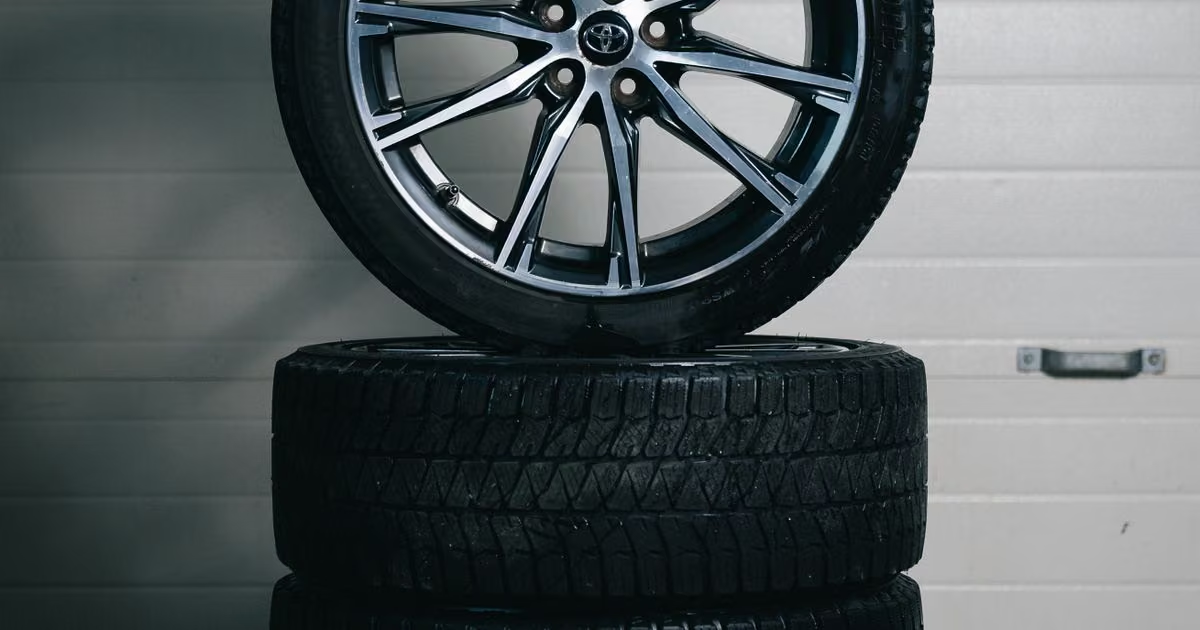
The key rule is that tyre requirements vary by country, so there is no single European standard to rely on. Many countries mandate winter tyres or carrying snow chains during the cold season or in alpine areas, sometimes triggered by dates and sometimes by conditions. Always check the specific rules for every country you will drive through, not just your destination.
Do I need winter tyres or snow chains in Europe?
Often, yes, depending on the country and season. Several countries require winter tyres in winter months or in winter conditions, and some require you to carry snow chains on certain mountain routes even if the road is currently clear. Requirements can apply by calendar date, by road signs, or whenever wintry conditions are present.
Look out for winter tyres marked with the three-peak mountain snowflake (3PMSF) symbol, which many countries accept as proof of a true winter tyre, rather than the older M+S marking alone. If you are unsure whether you need winter tyres at all, our guides on whether you need winter tyres in the UK and all-season vs summer vs winter tyres explain the differences.
What safety kit must I carry when driving in Europe?
Requirements vary, but a warning triangle and a hi-vis reflective jacket are very commonly required across European countries, and in some you need a vest for every occupant within reach of the cabin. Other countries add further items, so build your kit around the strictest country on your route to be safe.
| Item | Why you need it | Notes |
|---|---|---|
| Warning triangle | Required in many countries after a breakdown | Some require two |
| Hi-vis vest | Must be worn when outside on the carriageway | Keep it inside the cabin, not the boot |
| Spare bulbs / first-aid kit | Required in some countries | Check each country on your route |
| Snow chains | Required on some alpine routes in season | Practise fitting before you go |
Beyond the legal kit, the usual long-journey tyre essentials still apply: a working spare or sealant kit, a pressure gauge and an inflator. See our tyre safety checklist before a long drive for the full list.
Does the UK tread limit still apply abroad?
Your UK-registered car must still meet UK standards, so the legal minimum tread of 1.6mm across the central three-quarters always applies. However, several European countries set higher minimums for winter tyres, sometimes 3mm or 4mm, so legal-at-home tyres may not satisfy a foreign winter-tyre requirement. Check before you travel.
Because tyres take more punishment on a long European trip, it is worth having them in good shape before you leave. If your tread is marginal, fitting fresh tyres beforehand gives you more grip and a bigger legal margin. Our guide on the UK legal tyre tread depth covers the home rules in detail.
How to prepare your tyres before a trip abroad
Before a long drive overseas, run a full pre-trip tyre check: tread, pressure, condition and the spare, set to the loaded pressure for a fully packed car. Confirm the tyre and kit rules for every country on your route, and decide whether you need winter tyres or chains for the season and the roads you will use.
- Check the rules for every country, using AA or RAC guides and official sources.
- Inspect all five tyres for tread, damage and correct loaded pressure.
- Pack the legal kit for the strictest country on your route.
- Sort winter tyres or chains well ahead if you are travelling in the cold season.
Travelling soon? Get your tyres trip-ready
If a check shows your tyres are worn, damaged or not suitable for a winter trip, sort it before you go rather than risk a fine or breakdown abroad. Fast Tyre fits new and seasonal tyres at your home or workplace across London and central England, usually within 30 to 60 minutes. Book a mobile tyre fitting visit before you set off and travel with confidence.
Frequently asked questions
It depends on the country and the season. Several countries require winter tyres in winter months or conditions, and some require snow chains on certain routes. Rules vary widely, so check the specific requirements for every country on your route before you travel.
The three-peak mountain snowflake (3PMSF) marks a tyre that has passed a snow-traction test. Many European countries accept it as proof of a genuine winter tyre, often in preference to the older M+S marking alone, where winter tyres are legally required.
They cover the most common requirements, but some countries demand additional items such as a first-aid kit, spare bulbs or two triangles. Build your kit around the strictest country on your route, and keep the hi-vis vest inside the cabin, not in the boot.
Not usually for summer travel, as long as your tyres meet the UK 1.6mm minimum and are in good condition. For winter trips, some countries require winter tyres with higher tread minimums, so you may need a winter set or chains depending on where and when you go.
Use up-to-date official sources and the country-by-country driving guides published by the AA and RAC, plus the official transport or tourism websites for each country. Rules change, so always confirm current requirements shortly before you travel rather than relying on older advice.