
Key takeaways
- Driving on a fully flat tyre is almost never safe, it can destroy the wheel, damage the tyre beyond repair and cause loss of control.
- A flat tyre also changes your steering and braking, so stopping distances and grip drop sharply even at low speed.
- If you must move at all, do so only a few metres at walking pace to reach a safe, level spot, never drive any real distance.
- On a motorway or fast road, do not attempt anything: get behind the barrier and call for help.
A flat tyre is one of the most common reasons drivers get stranded, and the instinct is often to limp on to the nearest garage. That is usually a mistake. This guide explains when driving on a flat is genuinely dangerous, the damage it causes, how far you can realistically go, and the safer choices that protect both you and your wallet.
Is it safe to drive on a flat tyre?
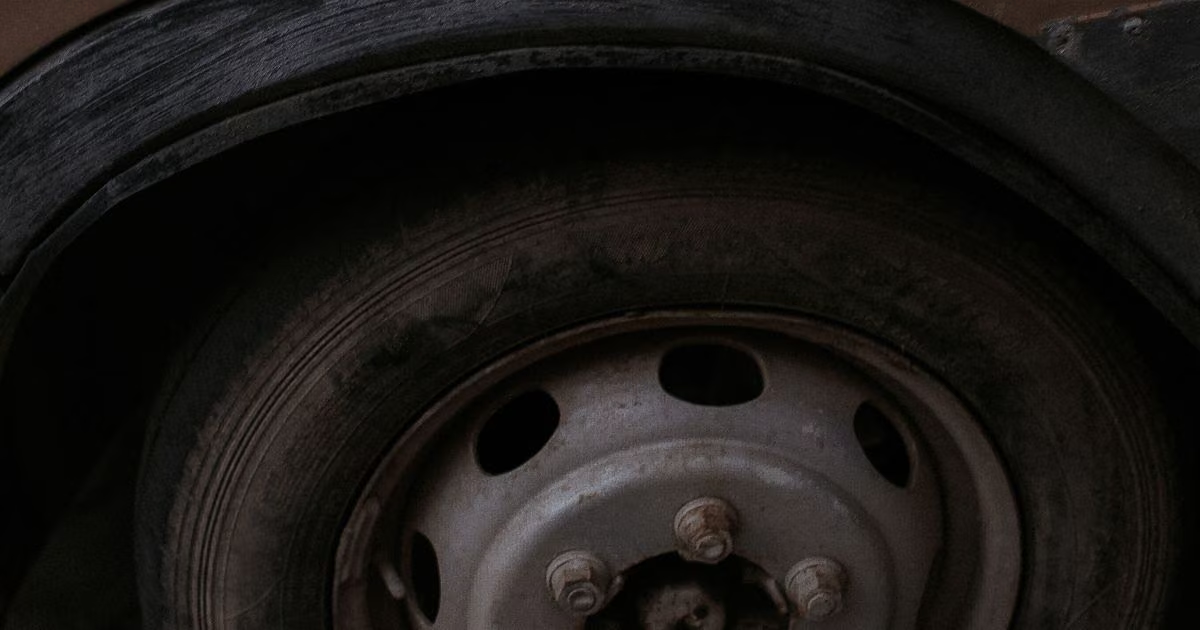
No, driving on a fully flat tyre is almost never safe. Once a tyre loses its air it can no longer support the car or grip the road properly, so steering and braking become unpredictable and the risk of losing control rises sharply. You also risk destroying the wheel and shredding the tyre. The only safe move is to stop as soon as you can do so safely.
A tyre is a pressurised structure: the air, not the rubber, carries the load. Remove that air and the sidewall folds under the weight of the car, which is why a flat feels so different to drive on even at low speed.
There is also a legal angle. Driving with a tyre in a clearly dangerous condition can put you in breach of the Road Vehicles (Construction and Use) Regulations, and a tyre that has been run flat is almost certainly unfit for use. So beyond the obvious safety risk, you could be committing an offence simply by carrying on.
What happens if you keep driving on a flat?
Driving on a flat tyre quickly turns a cheap puncture repair into an expensive replacement, and can damage far more than the tyre. The flat sidewall is crushed between the rim and the road, generating heat and friction that destroy the rubber and can buckle or crack the alloy wheel underneath.
- The tyre becomes unrepairable. A run on a flat shreds the inner liner, so even a small original puncture can no longer be safely repaired under BS AU 159.
- The wheel can be ruined. Alloy rims bend, scrape and crack when run on, often costing more than the tyre.
- Hidden damage spreads. Wheel bearings, brakes, suspension and the TPMS sensor can all be harmed.
- You can lose control. A collapsing or separating tyre pulls the car to one side without warning.
How far can you drive on a flat tyre?
You should treat the safe distance as effectively zero. If you genuinely cannot stop where you are, you may creep a few metres at walking pace to reach a safe, level surface away from traffic, but no further. Every metre adds heat and damage, and the further you go the more likely you are to wreck the wheel and lose control.
What should you do if you get a flat?
Slow down gently, avoid braking hard or steering sharply, and bring the car to a controlled stop somewhere safe and level, never on a bend, a crest or soft ground. Switch on your hazard lights, get all passengers out and away from traffic, and then decide whether to change the wheel or call for help.
- Ease off the accelerator and let the car slow naturally.
- Indicate and move to a safe, flat, firm surface well clear of moving traffic.
- Apply the handbrake and put the car in gear (or Park).
- Turn on hazard lights; use a warning triangle if it is safe to place one.
- Get everyone out on the side away from traffic and stand well back.
If the tyre is repairable and conditions are safe, you can fit your spare, see our step-by-step guide to changing a tyre safely. If you have no spare, read what to do without a spare.
When you must not attempt anything yourself
On a motorway or fast dual carriageway, never try to change a wheel or inspect a flat at the roadside. The hard shoulder and verges are among the most dangerous places on the network. Pull onto the hard shoulder or into an emergency refuge if you can, stop as far left as possible, and get out on the left.
National Highways advises drivers who break down on a motorway to exit the vehicle via the left-hand door, get behind the safety barrier, and call for help. Do not stand near the carriageway and do not attempt a repair. The same caution applies to any road where traffic is fast or there is nowhere safe to work.
On a smart motorway with no permanent hard shoulder, the advice is the same but the stakes are higher: aim for an emergency refuge area if you can reach one, use the SOS phone, and keep clear of the lanes. If you cannot get out safely, the official guidance is to stay belted in with your hazards on and call 999. Never gamble on a quick wheel change in live lanes.
Does insurance or recovery cover a flat tyre?
It depends on your policy. Standard breakdown cover usually includes attending a flat tyre and either fitting your spare or recovering the car, but it does not pay for the new tyre itself. Many drivers find a mobile fitter quicker and cheaper than a tow followed by a garage visit, especially when the tyre simply needs replacing.
Check what your cover actually includes before you need it: whether it comes to the roadside, whether home-start is included, and whether a mobile tyre service is an accepted option. Knowing this in advance saves a stressful decision when you are already stranded by the side of the road.
| Situation | Safe to drive on? | Best action |
|---|---|---|
| Standard tyre, fully flat | No | Stop now; change wheel or call out |
| Slow puncture, still inflated | Short, low-speed trip only | Get it checked or repaired promptly |
| Run-flat after a puncture | Limited, see sidewall | Reduce speed, head to fitter |
| Flat on a motorway | No | Behind the barrier, call for help |
Getting help when you cannot drive
If a tyre is flat and you cannot or should not change it, the safest option is to have a fitter come to you. Fast Tyre runs a 24/7 mobile service across London and central England, and our emergency callout team typically reaches you within 30 to 60 minutes to repair or replace the tyre on the spot. If you are on a motorway, always call the emergency services or your recovery provider first to reach safety.
Do not drive on it to reach a garage. We come to where the car is, 24 hours a day, and repair or replace it there. Typically 30 to 60 minutes across London and the nearer Home Counties, longer further out, and you get a real arrival time on the call.
Frequently asked questions
It is strongly advised not to. Even a short trip on a flat can wreck the wheel, make the tyre unrepairable and cause you to lose control. Move only a few metres at walking pace to reach a safe spot, then change the wheel or call for help.
Yes, very likely. With no air to support the car, the rim sits directly on the road and quickly bends, scrapes or cracks. Alloy wheels are expensive, so the damage from a short flat run often costs far more than the original puncture repair would have.
A flat tyre looks visibly squashed at the bottom, the car may pull or feel heavy, and your TPMS light usually comes on. A merely low tyre still holds its shape. If in doubt, stop and check the pressure rather than driving on.
Yes, within limits. Run-flats are designed to support the car after a loss of pressure, typically for up to around 50 miles at no more than 50mph. Check the figures for your tyres, reduce speed, and head straight to a fitter for replacement.
Do not attempt a repair. Pull onto the hard shoulder or an emergency refuge, stop as far left as you can, exit through the left-hand door, get behind the barrier and call for help. The hard shoulder is no place to change a wheel.