

Locking Wheel Nut Removal in Kingston upon Thames
A great many locking nuts are not solid metal at all. They are a steel core with a thin chrome plated cap pressed over it, which is what gives them the shine matching the rest of the set.
Mobile locking wheel nut removal across Kingston upon Thames
Water works its way under that cap, the steel beneath corrodes and swells, and the cap loses its grip on the core. After that the key goes on, engages the pattern in the cap perfectly, and spins the cap round while the nut underneath does not move at all.
It is a confusing failure because everything about it feels correct. The key fits, it turns, and the wheel stays exactly where it was. Drivers usually decide the key must be the wrong one and go hunting for another. There is no other. The cap has to come off before anything can turn the core, which means splitting or drawing it with a proper extractor and then gripping the steel underneath. That is fiddly work and it is entirely doable at the kerb. What it is not is a job for a rattle gun, which will spin a loose cap faster and achieve nothing.
The nut in the glovebox is not always the right nut. Cars change hands, wheels get swapped, and a key that visibly does not seat properly is a key that will round the pattern the first time real force goes through it. If it does not go fully home, stop before you turn it. We can come out in KT1, remove the nut properly with extraction tools rather than optimism, and fit a standard or replacement set so the whole thing stops being a guessing game. On a driveway in Kingston town centre, in a work car park or at the kerb.
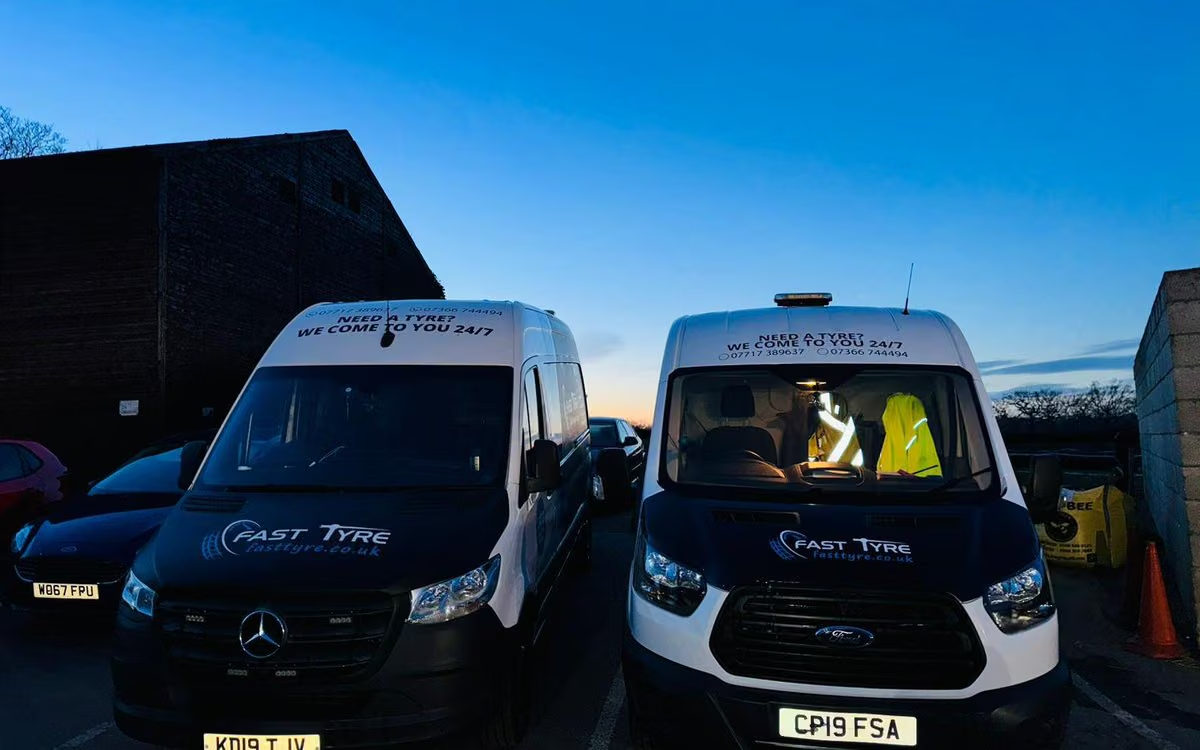
What you get with our locking wheel nut removal in Kingston upon Thames
- Rusted-solid locking nuts dealt with anywhere in Greater London
- A lost key does not stop the wheel coming off
- Alloy protected during removal
- Back on the A308 (Kingston Bridge) with a nut that will not strand you again
- A driveway in Hampton Wick and Norbiton, or wherever the car actually is
- Estates, SUVs and 4x4s handled as readily as small cars
Locking wheel nut removal in Kingston upon Thames is part of our wider mobile tyres fitted at home cover. For locking wheel nut removal in Kingston upon Thames, call 07717 389637 or ask us for a quote.
Local knowledge across Kingston upon Thames
Cars parked outside through a Thames valley winter take a lot of damp into the wheel arches, and a chrome capped locking nut is the component that shows it first. Nothing warns you. The set looks immaculate until the day a wheel has to come off and the key turns uselessly in your hand. Testing all four while a wheel is already off avoids finding out on a wet night in KT2.
Typical locking wheel nut removal jobs in Kingston upon Thames
Test it before the wheel comes up
The first thing to establish is whether the nut is actually turning or only the cap. Fit the key, take a quarter turn and watch the flats behind the cap rather than the key itself. If those flats stay still while the key moves, the approach changes immediately.
Salt, water and a winter of it
Caps fail on cars that sit outside through the wet months, and the wheel arch is the dirtiest place on any car. Road spray off the bridge and the steady wet run along the A307 Richmond Road keeps a nut permanently damp. Corrosion under a cap is less a fault than a design that ages.
What goes back is what matters
Once the old nut is off, fitting another capped locking nut invites the same failure in a few winters. A plain steel nut of the correct seat and thread has no cap to lose. If you would rather the wheels stayed locked, a fresh set is fine, provided somebody checks it occasionally.
What our customers say
★★★★★ 4.9 · based on 155 Google reviews
Really responsive and pleasant too. I WhatsApped in the morning rush hour, got an honest quote, an updated ETA with traffic, and he changed my tyre. Would highly recommend.
Google review
Very fast response, sourced the tyre I needed quickly and arrived within an hour. Transparent with costing and super friendly. Definitely recommend in an emergency.
Google review
Amazing service. Popped my tyre and they were out in 10 minutes with a new tyre and back on the road.
Google review
Locking Wheel Nut Removal in Kingston upon Thames, FAQs
Almost certainly not. When a key engages cleanly and the nut refuses to move, the cap has separated from the core. A wrong key does not go on in the first place, so a key that fits and turns is telling you where the fault actually is.
People try, and it occasionally works. It also rounds the core, cracks the alloy face if the socket goes on at an angle, and turns a straightforward job into a drilling exercise. Tools made for the purpose grip the metal rather than crushing it.
It adds a step at the start and it does not stop anything. The nut comes off, the tyre is repaired or replaced, and the wheel goes back torqued to the figure the manufacturer set. All of it is handled in the same visit rather than booked separately.
If one cap has gone, the others are the same age and have had the same weather, so they are worth testing while we are already there. Finding a second bad one on a dark evening in Norbiton is a nuisance. Finding it now takes a minute.
Yes, with care taken. The first movement of a stubborn nut happens while the wheel is still loaded, and on the hills around Coombe that means chocks in place before anything else. Tight bays are ordinary for us, since the alternative is moving a car we would rather not move.
Locking Wheel Nut Removal in Kingston upon Thames, 24/7
Prefer a callback? Send your details for a locking wheel nut removal price in Kingston upon Thames.