
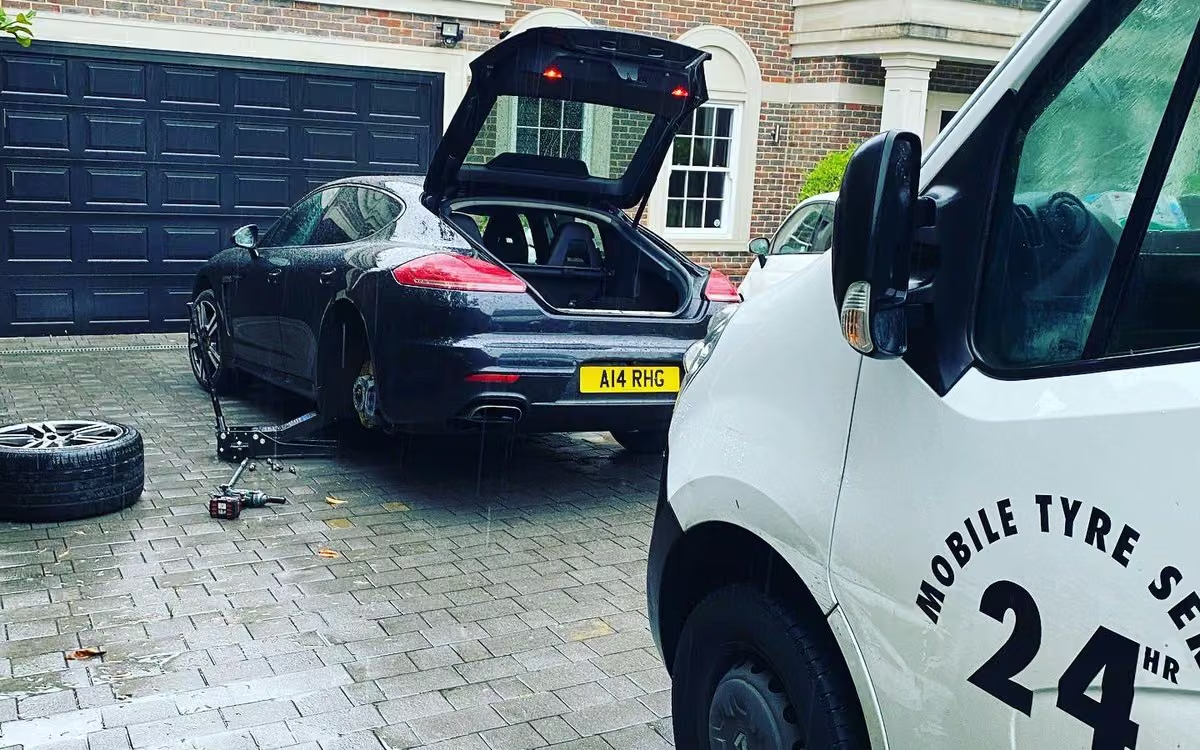
Puncture Repair in Morden
Leave it where it is. A nail in a tyre is doing a job while it sits there, filling most of the hole it made, which is why the tyre went soft over two days instead of emptying in two minutes.
Mobile puncture repair across Morden
The second reason is that we want to see it. The length of a screw tells us whether it reached the belt or went all the way through. The angle tells us whether it punched in square, which makes a neat round hole, or went in raked over, which cuts a long channel through the rubber. Once it is out and in your pocket, all of that has gone.
There is a practical one as well. A fine screw head sits flush and dark and is genuinely hard to find twice. Mark it with chalk, a strip of tape or anything visible on the tread beside it, then leave the car standing where it is. Nothing is made worse by a nail sitting still in a tyre on a drive.
Screws and nails collect where traffic slows and stops, which in SM4 usually means Central Road and the parking around Morden Hall. Pick one up and the only real question is whether it can be repaired. Whether it is St Helier in rush hour or Central Road at midnight, we answer. On London Road, day or night, St Helier included, arrival across SM4 runs 30 to 60 minutes.

What you get with our puncture repair in Morden
- Full inspection to confirm the damage is safely repairable
- The BS AU 159 mushroom-plug repair happens on the drive in Ravensbury
- The whole cycle, off, repaired, refitted, re-balanced, done beside the A24
- A valve check and a proper pressure reset, included
- The same straight advice here as in Sutton and Mitcham
- Same-day and emergency callout available 24/7
Puncture repair in Morden is part of our wider mobile puncture repair cover. For puncture repair in Morden, call 07717 389637 or send us your details for a price.
Local knowledge across Morden
Most of these calls across SM4 come from a driveway or a residents' bay rather than a live road, which is the good version of the problem. A car that is already parked has nothing to gain from anybody touching the tyre before we get there. Mark the spot, leave the object alone and let the car sit until we arrive.
Puncture Repair call-outs we handle in Morden
Chalked and left alone in Lower Morden
A screw spotted at the weekend, marked with a piece of tape and not touched afterwards. By the time we arrived the tyre still held most of its air, the hole was clean and central, and it took a plug and patch from the inside.
Pulled out on a drive in Morden Park
The owner had worked the nail free with pliers to see how bad it looked. Two minutes later the tyre was flat to the rim and the car could not be shifted off the drive at all. Same repair, considerably worse afternoon.
A screw that had gone in sideways
It looked like an ordinary tread puncture from above. The screw had entered at a shallow angle and travelled, so the channel inside ran well past where the head was sitting. Having it in hand made that plain before the tyre came off.
What Morden drivers say about our puncture repair
★★★★★ 4.9 · based on 155 Google reviews
Excellent service, super fast! I had a rental car and a screw got stuck in the side of the tyre. They sorted it on the spot.
Google review
Said is a very competent and courteous professional. Have used him several times with different challenges and never been disappointed.
Google review
A great guy and great service. Cheery, efficient and reasonably priced. Got me going back on the road in 25 minutes from arrival.
Google review
Puncture Repair in Morden, FAQs
Because it is corking the hole. A tyre with a nail still in it will often hold pressure well enough to stand for days. Take it out and the air leaves in about a minute, and now the car cannot be moved even a few metres.
Not while the car is standing still. What does damage is driving on it, because the object works about in the hole and enlarges it, and the falling pressure starts on the sidewall. Parked on a drive, a tyre is in the best state it will be in.
Then say so when you ring, and if you still have the thing, keep it. Without it we find the hole by taking the tyre off and putting the whole casing under water, which happens on a proper repair anyway.
A fair amount. Length against the depth of tread and belt says whether the casing was breached. A bent shank means it has been driven on and working sideways in the hole. A wide gauge screw makes a hole near the repairable limit.
Puncture Repair in Morden, 24/7
Prefer a callback? Send your details for a puncture repair price in Morden.