
Key takeaways
- Focus sizes run from 195/65 R15 on base cars up to 235/40 R18 and 235/35 R19 on the ST and the 2016 to 2018 RS, so read your own sidewall first.
- For everyday EcoBoost and diesel models, a mid-range or premium touring tyre with strong wet grip and steady wear is the right choice.
- A loaded Focus estate needs the correct load index and the full-load pressure from the door placard.
- The ST and RS need a genuine performance tyre, and the four-wheel-drive RS is best kept on four closely matched tyres.
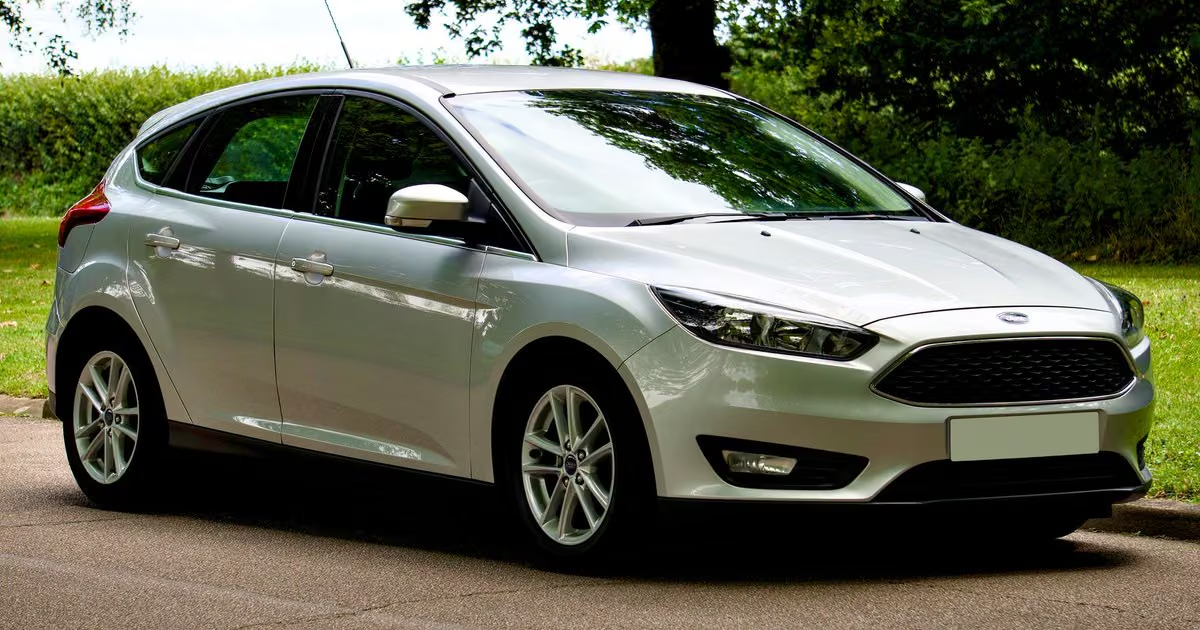
Few cars have done as many school runs, sales calls and motorway slogs as the Ford Focus. Across four generations it has been sold as a hatchback and an estate, with everything from a small three-cylinder EcoBoost to a diesel and the hot ST, and the tyre that suits one of those is not automatically right for another. Here is how to match the tyre to the Focus you actually own.
Which tyre suits an everyday Focus?
For the everyday EcoBoost petrol and diesel hatchbacks and estates, a touring tyre from a good mid-range or premium maker is the right tool. The Focus has always had a well-sorted chassis, so it does not need a sports tyre to feel tidy. What it needs is a short wet stopping distance, even wear over a high annual mileage and a tread pattern quiet enough not to drone at motorway speed.
Finding your Focus tyre size
The size depends on the generation, the trim and the wheels, and Ford has offered plenty of wheel options over the years, so read the sidewall or the placard in the driver's door shut before ordering. As a rough guide:
| Wheels | Sizes you will commonly see (check yours) |
|---|---|
| 15-inch, base models | 195/65 R15 |
| 16-inch | 205/55 R16, 205/60 R16 or 215/55 R16 |
| 17-inch, mid and upper trims | 215/50 R17 |
| 18-inch, including many ST models | 235/40 R18 |
| 19-inch, some ST models and the 2016 to 2018 RS | 235/35 R19 |
The load index and speed letter that follow the size have to be matched as well. If those characters mean nothing to you yet, our guide on what the numbers on your tyre mean takes the code apart piece by piece.
Estates, roof boxes and the load index
A Focus estate packed for a fortnight away, or a hatchback with a roof box and four adults aboard, pushes far more weight through the tyres than the daily commute does. That is where the load index earns its place. Never fit a tyre with a lower index than the placard asks for, and before a long, heavy trip set the pressures to the full-load figure rather than the everyday one. A tyre run soft under weight heats up and scrubs away its shoulders.
Wet grip matters more with a full car, too, because extra weight lengthens stopping distances. Pick from tyres with a B or better wet-grip grade on the tyre label, then let tread life and noise decide between them. Our guide on budget vs premium tyres explains where the extra money goes.
Getting the most from an ST or RS
The ST and RS are a different proposition. They put far more power through the tyres and are usually driven with more enthusiasm, so fit a genuine ultra-high-performance tyre with the speed rating the handbook specifies, in the size the car left the factory on. A cheap tyre on an ST is the quickest way to make a sharp car feel vague.
The 2016 to 2018 RS drives all four wheels, so keep all four tyres closely matched in brand, model and tread depth, and check the handbook for Ford's exact guidance. Earlier RS models drove the front wheels only and can be treated like an ST. If your ST also does the winter commute, a performance all-season tyre is a reasonable compromise, though a dedicated summer tyre gives the crispest response.
Front pair, rear pair or the full set?
Most Focus models drive the front wheels, and the fronts also carry the engine and do most of the steering and braking, so they normally wear out first. Replacing a front pair is therefore the usual job. Tyre makers generally advise putting the deepest tread on the rear axle for stability in the wet, which can mean moving the part-worn rears forward, so ask for all four to be measured before deciding. Our guide on whether to replace two or all four tyres explains the reasoning, and you can see how much is left using our guide to checking tread depth.
Is one set of tyres enough all year?
Plenty of Focus owners keep a single set on the car all year and never think about winter tyres. If that is you, an all-season tyre carrying the three-peak mountain snowflake symbol is worth considering: it keeps working as temperatures drop towards freezing and deals with slush far better than a summer tyre. The cost is a little less sharpness on a hot, dry day, which matters more on an ST than on a diesel estate.
Getting a Focus re-tyred without the garage trip
Fast Tyre brings tyres in your Focus size to your home, workplace or the roadside across London and central England through our mobile tyre fitting service. We usually arrive within 30 to 60 minutes, and once we are with the car the fitting takes around 20 to 30 minutes, with balancing and removal of the old tyres included in the visit. Call 07717 389637 with the size off your sidewall.
Frequently asked questions
It depends on the generation and wheels. Base cars often use 195/65 R15, 16-inch wheels take 205/55, 205/60 or 215/55 R16, 17-inch wheels usually 215/50 R17, and ST models 235/40 R18 or 235/35 R19. Confirm the size and ratings on your own sidewall or door placard.
Often, yes. On a car covering big motorway mileage, a premium or upper mid-range touring tyre tends to wear more slowly and keep its wet braking as the tread goes down, which spreads the higher price over more miles. On a low-mileage petrol hatch, a well-rated mid-range tyre is plenty.
A genuine ultra-high-performance tyre in the size and speed rating the handbook gives, usually 235/40 R18 or 235/35 R19 depending on the wheels. A summer tyre gives the sharpest response, while a performance all-season tyre suits an ST that is also used through the winter.
The 2016 to 2018 RS is four-wheel drive, so it is best kept on four closely matched tyres of the same brand, model and similar tread depth, following the handbook. Earlier RS models drove the front wheels only and can be treated like an ST when replacing tyres.
Yes. Fast Tyre fits tyres at your home, workplace or the roadside across London and central England, usually arriving within 30 to 60 minutes. The fitting itself takes around 20 to 30 minutes once we are with the car, and we set the pressures to the figures on your placard before we leave.