
Key takeaways
- Supermarket car parks are private land with ANPR time limits, so the parking clock is a separate problem from the tyre.
- Photograph the flat tyre with a bay marker in shot and note the time. That evidence is what an appeal turns on.
- Hot tarmac in summer is soft enough for a jack to sink. Use a flat board or a spreader plate under it.
- Tell customer services you are stuck. Many operators can note the registration, and it costs nothing to ask.
Coming out of a supermarket to a flat tyre is one of the more common ways to discover a slow puncture. The car has sat still for forty minutes, the pressure that was marginal on the way in has finally gone, and now you have a boot full of shopping, a tyre on the rim and a camera at the entrance that started timing you when you drove in.
There are two problems here and they run on different clocks. Deal with the parking one first, because it takes about ninety seconds and it gets worse the longer you leave it.
What should you do first in a supermarket car park?
Build the evidence, then tell someone. Supermarket car parks are private land run under contract, usually with automatic number plate recognition and a signed maximum stay. The charge for overstaying is issued automatically by a camera that has no idea your tyre is flat, so the only thing that will ever explain it is evidence you gather now.
Before you touch the tyre:
- Photograph the flat tyre with a bay number, trolley bay or store sign visible in the same frame, so the picture proves the place as well as the problem.
- Photograph the whole car in its bay, and the sidewall showing the tyre size.
- Note the time. If you have a receipt from inside, keep it, because it timestamps you.
- Go to customer services and say you have a flat and are waiting for help. Ask them to note the registration and get the name of whoever you spoke to.
None of that guarantees anything. Charges are contractual and the operator decides, with appeals going to the operator first and then to POPLA or the Independent Appeals Service depending on which trade body they belong to. But an appeal is decided on what you can show, and a dated photograph taken while standing next to the car is the strongest thing you will ever have.
Is it safe to change a wheel in a supermarket car park?
Usually yes. You are off the public road, the surface is level, and traffic is moving at walking pace. The two things that catch people out are the softness of the surface in hot weather and the tightness of a standard bay, and both are easy to plan around once you have noticed them.
Tarmac softens in sustained heat. A jack concentrates a large load through a very small footprint, and on a hot afternoon that footprint can sink into the surface while the car is up, which is exactly when you do not want anything moving. A flat piece of wood, a spreader plate or even a thick doormat under the jack base solves it entirely.
| Situation | Do this |
|---|---|
| Hot day, soft tarmac | Put a flat board or spreader plate under the jack before lifting. |
| Bay marked with a drainage fall | Chock the diagonally opposite wheel. Water channels mean bays are rarely truly level. |
| Cars parked tight both sides | Wait for one to leave, or ask the store to cone the neighbouring bay. You need swing room for the brace. |
| Parent-and-child or accessible bay | Move if the car will move. Those bays are monitored more closely than any other. |
| Beside a trolley bay | Reposition. Trolleys get pushed hard and they do not stop for a jacked-up car. |
Why do flats appear when the car has been parked?
Because a slow puncture does its work while the wheel is still. A nail or screw picked up on the drive over can seal itself well enough to hold pressure at speed, then leak steadily once the car stops and the weight settles in one place. That is why so many punctures are discovered in car parks rather than on the road.
The common causes, roughly in order of how often they turn up:
- A nail, screw or fragment of metal in the tread, often barely visible until you turn the wheel.
- A perished or leaking valve, which produces exactly the same symptom with nothing to find in the tread.
- A poor seal between tyre and rim, common on older alloys with corrosion around the bead.
- Kerbing on the way in, which damages the sidewall rather than the tread and is not repairable.
If you want to work out which of those you are looking at before anyone arrives, the slow puncture guide covers the diagnosis, and this one covers what to do when you can see the nail. Do not pull the nail out. While it is in place it is partly plugging the hole, and it also shows the fitter exactly where the damage is.
What about the shopping while you wait?
Deal with the chilled and frozen items and ignore the rest. A wheel change or a tyre replacement is a job measured in tens of minutes rather than hours, but that is long enough to matter on a warm day, and it is the one part of this situation you can fix immediately without any tools.
What works, in order of how much difference it makes:
- Move frozen and chilled bags out of the boot and into the footwell of the shaded side of the car, not the boot, which is the hottest part of a parked vehicle.
- Keep the bags together. A tight group of cold items stays cold far longer than the same items spread out.
- If the wait is going to be long and the weather is hot, ask customer services whether they will hold chilled items in store. Many will, and it is a normal request.
- Leave the boot clear anyway, because that is where the spare and the jack usually live and you will need to get at them.
That last point catches people out more than the food does. On a lot of cars the spare wheel, the jack and the locking wheel nut key all live under the boot floor, directly beneath a full weekly shop.
Getting moving again
The realistic options are the spare, a repair, or a replacement. Which one applies depends on where the damage is rather than how big it looks: repairs are confined to the central three-quarters of the tread under BS AU 159, and nothing on the sidewall can be repaired at all, regardless of how minor it appears. You will also see this written as tire repair, the US spelling, which turns up a lot in search results and means the same thing.
If the car has a full-size spare and you are able to change it, that is the quickest way out of the car park, and you can sort the damaged tyre at leisure. If it has a space-saver, fit it and observe its speed limit. If it has neither — which is now most new cars — the tyre has to come to the car.
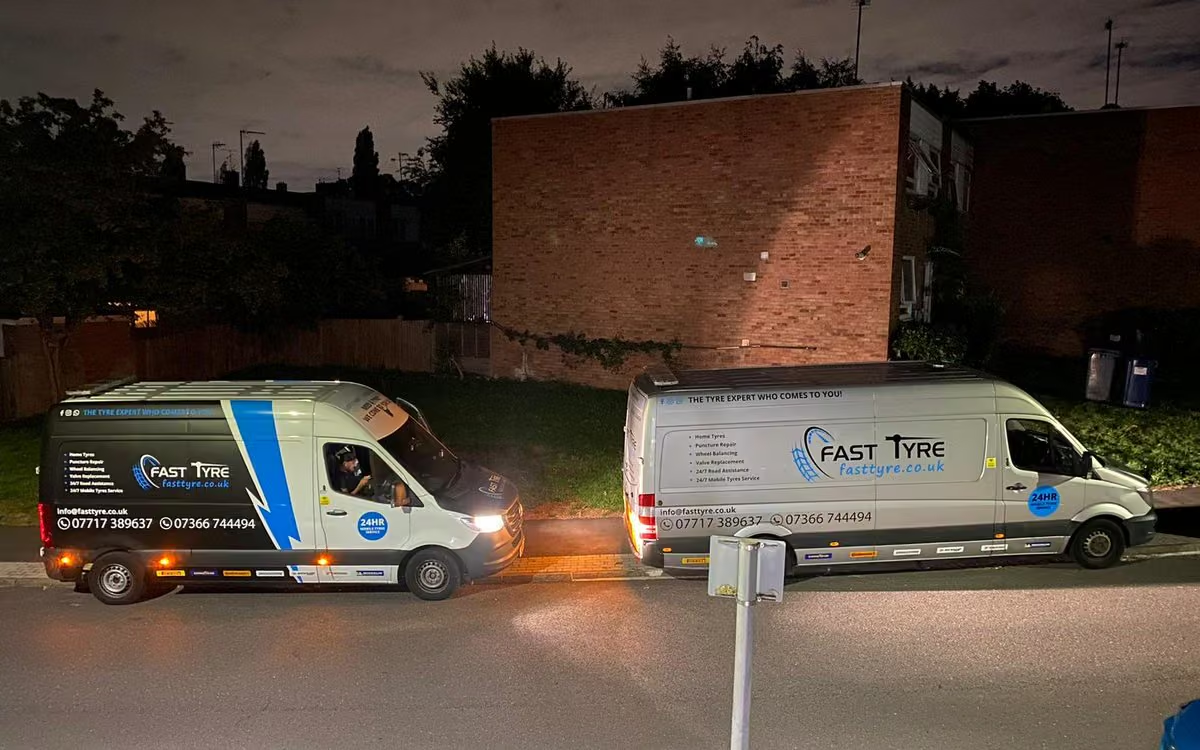
We come to the car with the tyre, the fitting machine and the balancer, so the job finishes in the bay rather than at a garage tomorrow. Give us the store, the postcode and the size off the sidewall. Typically 30 to 60 minutes across London and the nearer Home Counties, longer further out, and you get a real arrival time on the call.
For the wider picture on how at-the-car fitting compares with driving to a garage, see mobile fitting versus a garage, or puncture repair for what a proper repair involves.
Frequently asked questions
The camera issues charges automatically and does not know your tyre is flat, so it is possible. Photograph the tyre with a bay marker in shot, note the times, and tell customer services. Appeals go to the operator first, then POPLA or the IAS.
Yes, and it is one of the easier places to work: level ground, good light and no passing traffic. Give the store name and postcode, your bay area, and the tyre size from the sidewall so the right tyre travels with the van.
No. While it is in place it partly plugs the hole and slows the leak, and it shows the fitter exactly where the damage is. Pulling it out usually turns a slow leak into a flat tyre within minutes and tells you nothing useful.
A slow puncture leaks fastest when the wheel is still and the weight is settled in one spot. Something picked up earlier can hold pressure while you drive and then let go in the car park, which is why so many flats are found on the way back to the car.
No. Even a mile on a deflated tyre destroys the inner sidewall and can damage the wheel rim, so a repairable puncture becomes a new tyre and possibly a new wheel. Fit the spare or have the tyre brought to the car.