
Tyres in Elephant and Castle
Run your fingers along the outer sidewall of a tyre where it meets the wheel.
Mobile tyre replacement across Elephant and Castle
It is a genuinely useful feature on a car that lives on the street, and it is worth understanding what it does not do. It protects the wheel, not the tyre. The rib itself takes the scrape and gets chewed, which is the point, but it will not stop the sidewall above it being ground down by repeated hard contact with the same edge. It is also not standard across a size. Two tyres with identical numbers on the sidewall from two different makers can differ on this, and it is rarely mentioned in a listing, so it is a question worth asking rather than assuming. Some carry a marking such as FP or MFS to say so. When we talk you through the options in your size, it is one of the things we can tell you before anything goes on the car.
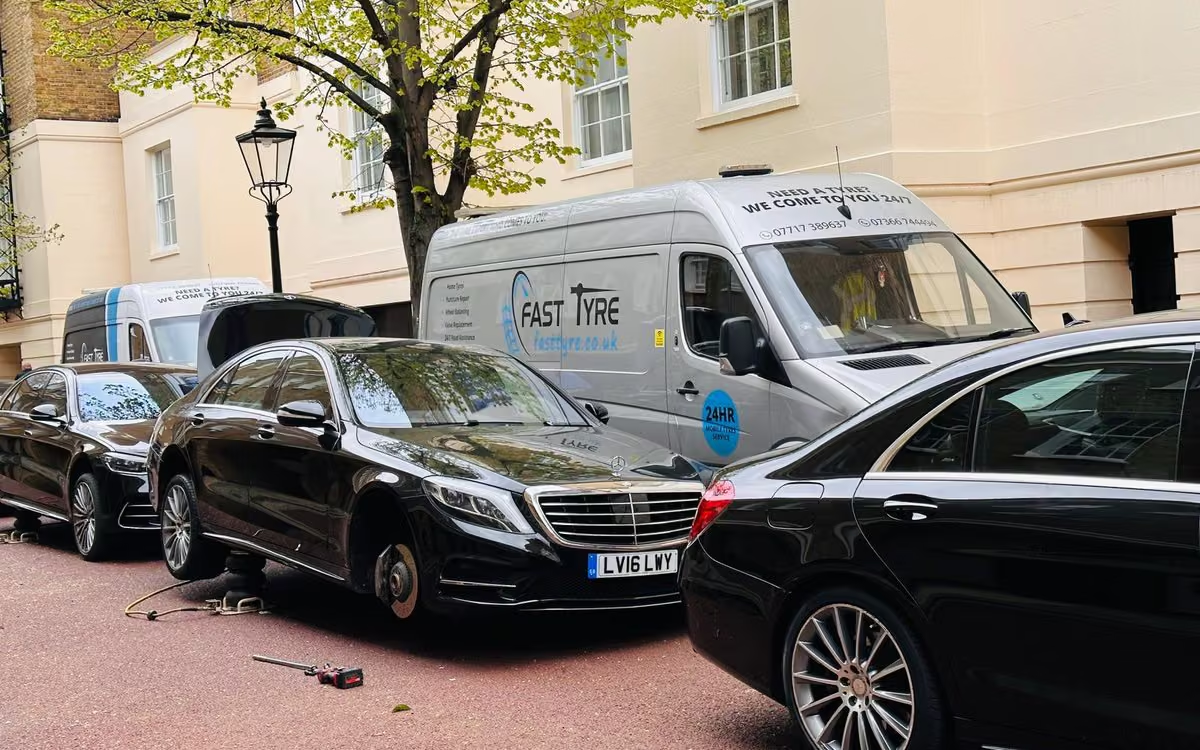
Across SE1, most of the tyre fitting we do happens on a driveway or in a work car park rather than on a ramp. It saves the queue, and it saves the bit that matters more, which is driving on a tyre you already know is finished on a road like the A201. Old tyres leave the Heygate area, the London Road area and SE1 with us, every time. You watch it happen in New Kent Road, or at the kerb in Elephant and Castle. A SE1 address in Walworth and one in Newington are the same round.

What you get with our tyre replacement in Elephant and Castle
- Greater London drivers pick the tier; premium, mid-range or budget, and we fit it
- Each wheel is balanced as part of the fitting
- Whether we come to New Kent Road or Walworth, the valve is checked and the pressures set to spec
- Nothing left at the roadside on Walworth Road; the old tyre is recycled
- Cars, SUVs and 4x4s, here and over in Kennington and Walworth
- Contactless and chip and pin both taken on site
Tyre replacement in Elephant and Castle is part of our wider mobile tyre fitting across London and the home counties cover. For tyre replacement in Elephant and Castle, call 07717 389637 or ask us for a quote.
Local knowledge across Elephant and Castle
Almost every space around here has a kerb on one side and a lane of moving traffic on the other, and the newer kerb faces put in during the redevelopment are square edged and high. That combination marks wheels faster than most parts of London manage. A rim protector will not make a car immune, and it does mean the first thing your wheel meets on a tight manoeuvre off London Road is a piece of rubber that was designed to be sacrificed.
Tyres call-outs we handle in Elephant and Castle
Rib chewed, alloy untouched
A car parked nightly against a high kerb had a rim protector worn ragged along one side and a wheel edge that still looked new. The rubber had done precisely the job it was there to do.
Same size, no rib
A replacement tyre matched the old one on every number on the sidewall and did not have a protector. The difference only became obvious when the wheel behind it started collecting marks.
Chosen for a kerbside bay
A driver who parks tight against a kerb every night specified it deliberately when ordering, which is the sensible moment to make that decision rather than after the wheels are marked.
What Elephant and Castle drivers say about our tyre replacement
★★★★★ 4.9 · based on 155 Google reviews
Called in the morning, booked for an afternoon slot and paid a deposit. He attended to my girlfriend's car at her job. He was punctual and efficient. 10/10.
Google review
Really responsive and pleasant too. I WhatsApped in the morning rush hour, got an honest quote, an updated ETA with traffic, and he changed my tyre. Would highly recommend.
Google review
Very fast response, sourced the tyre I needed quickly and arrived within an hour. Transparent with costing and super friendly. Definitely recommend in an emergency.
Google review
Tyres in Elephant and Castle, FAQs
Look at where the tyre meets the wheel and see whether a rubber ring stands proud of the metal edge. If it does, the kerb hits rubber first. Some makers also mark it on the sidewall with letters such as FP or MFS, though not all of them bother.
No, and it is important not to expect that. The rib is sacrificial and it shields the rim flange behind it. The sidewall above the rib can still be ground away by repeated kerbing, which is a different and more serious problem than a marked alloy.
Usually, though not from every maker and not in every pattern. It is one of the things worth checking before you commit rather than discovering afterwards. If it matters to you, say so when you call and we will tell you which of the options in your size have it.
That depends on whether you intend to have them refurbished. If you do, a protector is what stops the new finish going the same way inside a year. If you are content with the marks, it is a smaller consideration and a tyre choice made on other grounds is perfectly reasonable.
Tyres in Elephant and Castle, 24/7
Prefer a callback? Send your details for a tyre replacement price in Elephant and Castle.