
Puncture Repair in Deptford
The legal minimum is not one number in one place.
Mobile puncture repair across Deptford
The eye is a poor judge of this. A tread pattern with deep central grooves reads as plenty of tyre even when the shoulders have gone, and the inner shoulder is the one facing under the car where nobody has cause to look. We have measured tyres that felt fine to their owners and found one of the three readings sitting barely above the limit. At that point the puncture is no longer the question, because the tyre has weeks left in it either way. Three readings take under a minute, and they turn the repair decision from an opinion into a number.
The space saver in the boot is the reason people drive on a flat, which is a shame, because it is not much of a solution either. Changing to it at the roadside on New Cross Road is also the least safe thing you will do that week. Valve in the Creek area, balance in New Cross, pressures before we go. The wheel comes off in Deptford, not on a ramp in Bermondsey. The SE8 postcode and a street in Greenwich: that is enough.
What you get with our puncture repair in Deptford
- Across Greater London, nothing is repaired until it is confirmed repairable
- Repaired the way the standard specifies, from the inside
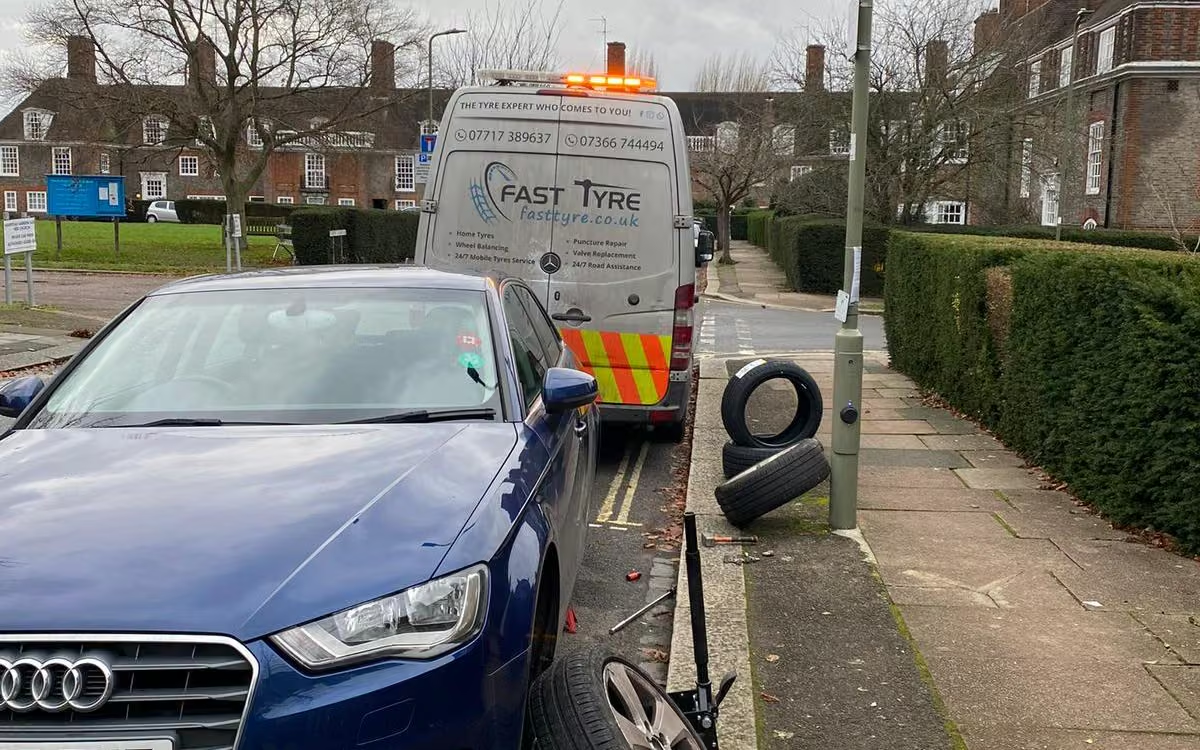
- The whole cycle, off, repaired, refitted, re-balanced, done beside Creek Road
- Pressures reset and the valve checked before we go
- You get the honest verdict rather than the profitable one
- Same-day slots and 24/7 emergency callout in Deptford
Puncture repair in Deptford is part of our wider puncture repair across London and the home counties cover. For puncture repair in Deptford, call 07717 389637 or get a price for your tyre.
Local knowledge across Deptford
Deptford High Street and its market leave a steady supply of grit, glass and small metal in the gutters, so punctures are common here and most of them land in the part of the tread that can be repaired. The question is almost never whether the hole can be fixed. It is whether the tyre is worth fixing. Since we come to wherever the car is parked in SE8, the gauge comes out before anything is agreed, and you get the three numbers rather than a verdict.
Puncture Repair call-outs we handle in Deptford
Three readings, one bad
Centre and outer both measured comfortably. The inner third was almost at the limit, which the owner had no way of seeing from the pavement side of the car. That tyre was replaced rather than patched.
Measured on all four
Once a gauge is out it costs nothing to do the rest of the car. On a car parked off Deptford High Street it turned up a second tyre heading the same way, which was worth knowing about a few weeks in advance.
Legal, but not for long
A tyre measuring just over the limit at all three points. Repairable, technically, and we said plainly that the repair would outlive the tyre by a considerable margin.
What Deptford drivers say about our puncture repair
★★★★★ 4.9 · based on 155 Google reviews
So glad I called when I got a puncture. They kept me posted, arrived in good time and the price was very reasonable. I felt safe and looked after by their excellent service.
Google review
Abdul was super quick getting to me, literally within 30 minutes, and super quick sorting my car out. Very polite and checked I was OK. Highly recommend.
Google review
Said is a very competent and courteous professional. Have used him several times with different challenges and never been disappointed.
Google review
Puncture Repair in Deptford, FAQs
Because a repair is only sensible on a tyre with real life left in it. If the tread is nearly gone at any point across the width, you would be paying to fix something you are about to throw away. Measuring first turns that into a fact rather than a judgement call.
Three points across the width of the tread, the inner third, the centre and the outer third, and then at more than one place around the tyre. The requirement covers the central three quarters of the width the whole way round, so a single reading in the middle proves very little.
Because wear is rarely even and the edges usually go first, particularly the inner one. Deep central grooves make a tyre look healthy from where you are standing. The shoulder does much of the work when the car turns, and it is the reading that most often comes back short.
Then we tell you exactly that and let you decide. A repair on a tyre with a small amount of tread left is both legal and safe, and it is also money spent on something you will be replacing shortly. Most people would rather hear that before the work than afterwards.
Puncture Repair in Deptford, 24/7
Prefer a callback? Send your details for a puncture repair price in Deptford.