
Mobile puncture repair across Victoria
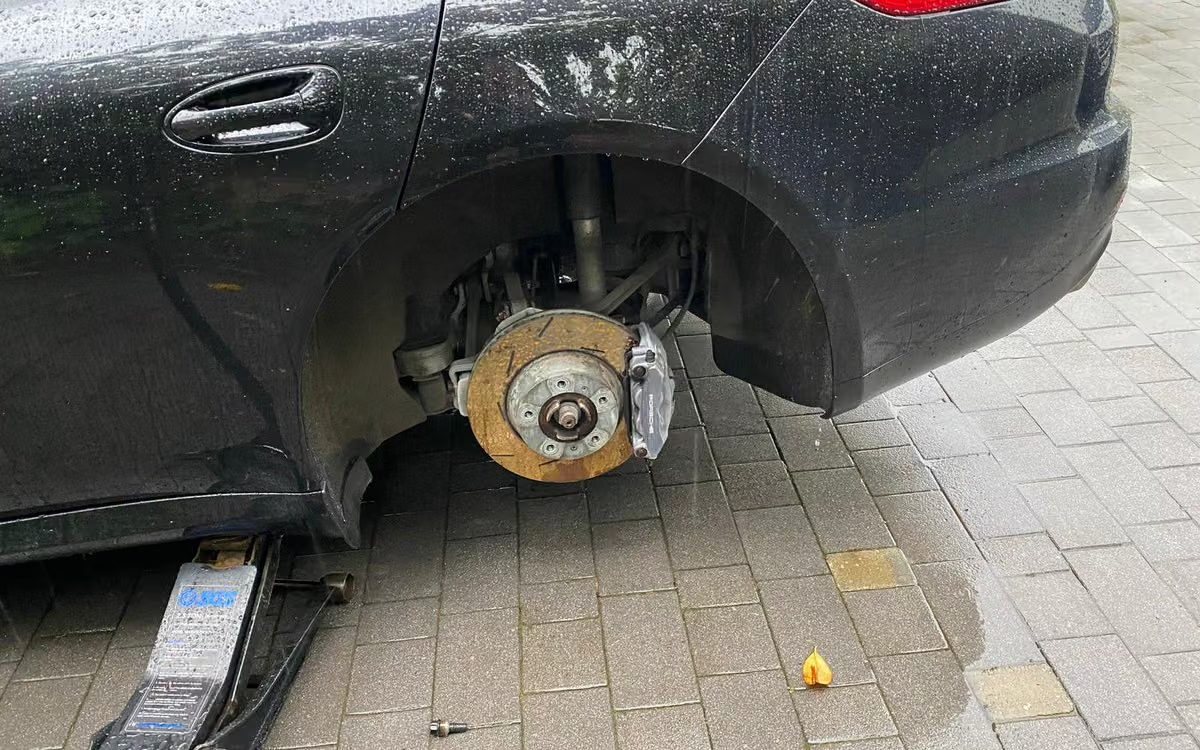
The symptoms are distinctive if you know to look for them. The tyre goes down over a fortnight rather than a day, there is nothing in the tread, the valve tests dry, and the loss is roughly the same every time regardless of use. The test is the tyre off the rim and the bare wheel in water, or soaped all over. A puncture bubbles at a point. A porous wheel bubbles from the face of the casting or all along the line where the tyre sat, and no repair to a tyre would ever have touched it. That is worth finding out before you pay somebody to patch something that has no hole in it.
Screws and nails collect where traffic slows and stops, which in SW1 usually means Buckingham Palace Road and the parking around Grosvenor Gardens. Pick one up and the only real question is whether it can be repaired. Steep camber in Westminster? We move a few metres, Grosvenor Gardens or anywhere else. Blocked drive in Buckingham Palace Road? Open kerb in the Ebury Street area? Either works. The SW1 postcode and a street in the Ebury Street area: that is enough.
What you get with our puncture repair in Victoria
- The tyre is inspected properly on your Westminster driveway, not glanced at
- Across Greater London, the repair is an internal mushroom plug to British Standard
- The whole cycle, off, repaired, refitted, re-balanced, done beside Victoria Street
- The valve gets checked and the pressures go back to spec
- The same straight advice here as in Belgravia and Westminster
- Same-day and emergency callout available 24/7
Puncture repair in Victoria is part of our wider mobile puncture repair cover. For puncture repair in Victoria, call 07717 389637 or send us your details for a price.
Local knowledge across Victoria
Kerbing is relentless around here, because every manoeuvre happens in a tight bay, a hotel forecourt or an underground ramp with a wall on one side. A scuffed rim looks purely cosmetic and usually is, but the scuff is where the protective coating has gone, and a winter of salt working behind it is how a wheel starts to weep. If a tyre in SW1 has been asking for air every couple of weeks with nothing at all to find in the tread, suspect the wheel before you suspect the tyre.
Puncture Repair call-outs we handle in Victoria
Nothing in the tread at all
A car in a bay near Grosvenor Gardens had been losing air for a month. The tyre came off, went into water, and stayed silent. The wheel bubbled from the casting behind the spoke.
Corrosion under a kerb scuff
A rim scuffed on an underground ramp the previous winter had corroded underneath the damaged lacquer, and the leak followed the line of the scuff around the wheel.
Two visits that fixed nothing
A driver had already paid for a tyre repair elsewhere and then a new valve. Both were sound. The air had been coming through the wheel the whole time.
What Victoria drivers say about our puncture repair
★★★★★ 4.9 · based on 155 Google reviews
Really responsive and pleasant too. I WhatsApped in the morning rush hour, got an honest quote, an updated ETA with traffic, and he changed my tyre. Would highly recommend.
Google review
Very fast response, sourced the tyre I needed quickly and arrived within an hour. Transparent with costing and super friendly. Definitely recommend in an emergency.
Google review
Amazing service. Popped my tyre and they were out in 10 minutes with a new tyre and back on the road.
Google review
Puncture Repair in Victoria, FAQs
Yes, on cast alloys. The casting contains tiny voids and occasionally they line up into a route through the rim. The coating normally seals them, so the leak only appears years later once corrosion has got under a chip or a scuff and opened the path back up.
By the pattern and then by test. A puncture usually loses air faster and bubbles from one point. Porosity loses air slowly and evenly and bubbles from the face of the casting or along the whole seat line. We take the tyre off and check the bare wheel rather than guessing from the outside.
Often. The affected area is stripped back to clean metal and sealed from the inside, which is a proper fix rather than a bodge. Where corrosion has eaten into the seat area badly enough to leave it pitted and uneven, the wheel is finished and no sealer will save it.
No, which is the reason this is worth diagnosing first. Patching an undamaged tyre does nothing except cost you a visit, and the leak carries on exactly as before. It is one of the more common reasons people end up paying twice for the same symptom.
Puncture Repair in Victoria, 24/7
Prefer a callback? Send your details for a puncture repair price in Victoria.