
Key takeaways
- Breakdown is not among the statutory grounds for challenging a penalty charge. It is a discretionary "compelling reasons" argument.
- Even on appeal, an adjudicator can only recommend that the authority cancels on that basis, not order it.
- Evidence decides it. Independent proof from a recovery firm or fitter, with times, is what authorities ask for.
- Get the paperwork at the time. Reconstructing it a month later is much harder and much less persuasive.
You broke down somewhere you were not allowed to stop, dealt with it, and a penalty charge notice arrived a fortnight later. The natural reaction is that this is obviously unfair and will be sorted out with one phone call. It might be. But the legal position is not the one most drivers assume, and knowing the real shape of it changes what you should do in the first few minutes rather than the last.
Is breaking down a valid reason to cancel a PCN?
Not as a right. Parking and bus lane enforcement in England is civil, and the regulations set out a specific list of grounds on which you can make formal representations. Those grounds cover things like the contravention not having occurred, not being the owner at the time, the vehicle having been taken without consent, the charge exceeding the amount due, procedural impropriety by the authority, an invalid traffic order, and the charge already having been paid.
Mechanical failure is not on the list. Neither is emergency. The regulations do provide a separate route: alongside the statutory grounds you may put forward compelling reasons why the authority should cancel the charge, and that is where a breakdown belongs. It is a request that discretion be exercised, not the assertion of a right.
What actually persuades them?
Independent evidence with times on it. An authority is being asked to accept that the car genuinely could not be moved, on the say-so of the person who wants the ticket cancelled, so anything that corroborates the story from outside is worth more than the story itself.
Southwark, for one, publishes exactly this expectation: if you get a parking ticket during a breakdown you can challenge it, but you must have proof from a recovery company. The same council also warns that a vehicle immobilised because it ran out of fuel is unlikely to have its ticket cancelled, which is a useful signal about where the line sits. The distinction being drawn is between something that happened to you and something you allowed to happen.
What to gather, ideally while you are still standing next to the car:
- An invoice or job sheet from whoever attended, showing the registration, the location, and the times they arrived and finished.
- Photographs of the car in position with the flat tyre visible, and of any signs or lines that apply.
- The time you broke down and the time you called for help, which your phone records for you.
- Any breakdown provider reference number, even if the outcome was that they could not fix it.
- The damaged tyre itself, or a photograph of it off the car, which makes the failure concrete.
The bit people get wrong
They wait. A PCN arrives weeks later, and by then the fitter's paperwork has been thrown away, the photographs were never taken, and the case rests on an assertion. The whole of your position is assembled in the ten minutes while the car is still where it broke down, and none of it is difficult if you know to do it.
How the process runs
There is an informal stage and a formal one, and the timings are worth knowing because one of them can cost you money.
| Stage | What happens |
|---|---|
| Informal challenge | Made before a Notice to Owner is issued. Does not by itself extend the 14-day window for paying at the reduced rate unless the authority agrees to extend it. |
| Notice to Owner | You have 28 days from service to pay or make formal representations. |
| Authority's decision | They must decide and serve acceptance or rejection within 56 days of receiving representations. |
| Appeal to an adjudicator | 28 days from service of the rejection. A late appeal may still be registered if you explain the delay. |
The reduced-rate point catches people out. Challenging informally feels like the responsible first step, and it does not automatically stop the discount clock, so a challenge that takes three weeks to answer can leave you paying the full amount if it fails. Ask the authority to extend the discount period when you challenge, and factor the risk in.
What an adjudicator will and will not look at
London Tribunals states plainly that adjudicators decide appeals based solely on the evidence submitted by the parties, and that it is for you to prepare your own case, including obtaining information from third parties yourself if you need it. Nobody investigates on your behalf. If the fitter's invoice exists but you did not submit it, for the purposes of the appeal it does not exist.
It is also worth being realistic about which enforcement you are dealing with, because the rules differ. A council or TfL penalty charge is civil enforcement with the process above. A charge from a private operator on private land, such as a retail or station car park, is a contractual claim with a completely separate appeals route through the operator and then POPLA or the Independent Appeals Service. And a fixed penalty issued by a police officer is a criminal matter with no informal appeal at all.
What if it is a hire or company car?
Then the paperwork route is different and the timing matters more. Among the statutory grounds is one covering vehicles on hire: where a hire firm has a hiring agreement in place and has transferred liability to the hirer under it, the charge follows the hirer rather than the registered keeper. In practice the rental company receives the notice, names you, and passes it on, usually with an administration fee of its own.
That extra hop eats time, which is the real problem. A charge that reaches you three weeks late has already burned the discount window and may be close to the representation deadline. If you break down in a hire or lease car somewhere enforceable:
- Tell the hire or lease company that day, and get the report logged against the agreement.
- Keep your own copy of every piece of evidence rather than relying on them to hold it.
- Ask them to forward any notice immediately rather than at their next admin run.
- Check who the representations have to come from, since it is not always the person driving.
Reducing the odds of being in this position
Get the car out of the enforceable place as soon as it is safe, and get the tyre dealt with where the car is rather than leaving it parked while you arrange something. The longer a vehicle sits in a bus lane, a permit bay or a suspended space, the more contraventions it can accumulate, and each one is its own charge with its own timetable.
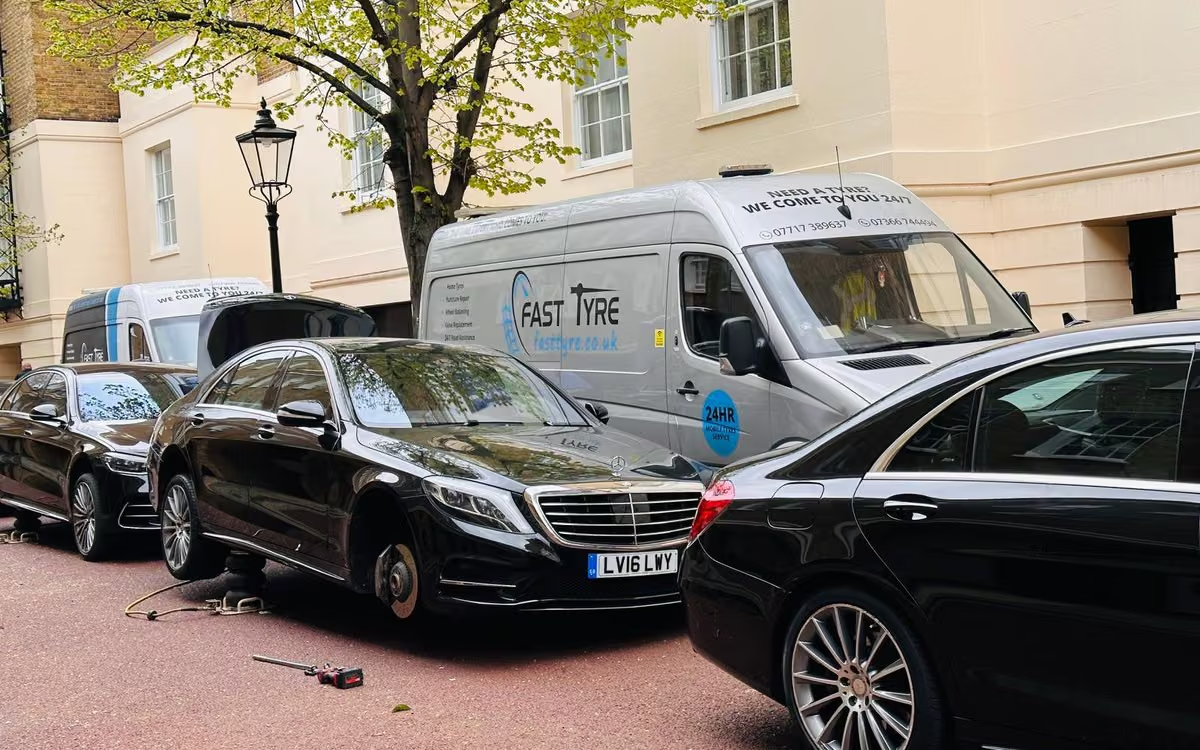
We fit the tyre where the vehicle is standing and give you a job sheet with the times on it, which is the evidence an authority asks for. Give us the postcode and the size off the sidewall. Typically 30 to 60 minutes across London and the nearer Home Counties, longer further out.
For the safety side of the same situation see when your car is blocking the road, and red routes in London covers the strictest version of it.
Frequently asked questions
No. The statutory grounds for representations cover things like the contravention not occurring, not being the owner, or the charge being wrong. Breakdown is not among them, so it is raised as a compelling reason for the authority to exercise discretion instead.
Independent proof with times on it. Southwark, for example, states you must have proof from a recovery company. An invoice or job sheet showing the registration, location and times, plus photographs of the car in position, is the strongest package.
They may recommend it rather than order it. Where a compelling reason is accepted rather than a statutory ground, the regulations allow the adjudicator only to recommend that the enforcement authority cancels the charge, which is persuasive but not binding.
Not automatically. An informal challenge does not by itself extend the reduced-rate window unless the authority agrees to extend it, so a challenge that takes weeks to answer can leave you paying the full amount. Ask for an extension when you challenge.
Ask for a job sheet or invoice showing the registration, the location and the times of arrival and completion. That is the independent, timed record an authority looks for, and it is much easier to obtain at the time than weeks afterwards.
No. A charge from a private operator is a contractual claim with its own appeals route through the operator and then POPLA or the Independent Appeals Service. Council and TfL penalty charges are civil enforcement with statutory representations and a tribunal.