
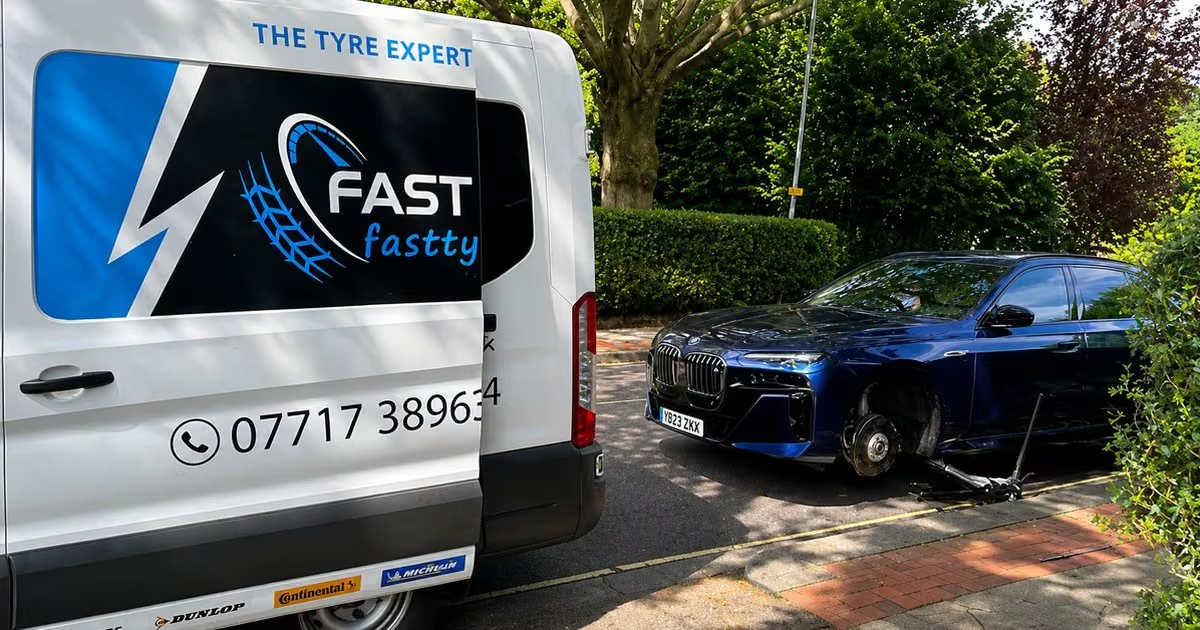
Key takeaways
- A fitter without an on-board balancer cannot finish the job properly, so ask before booking.
- Repairs should be to British Standard BS AU 159, from inside the tyre, not an external plug.
- A business taking your old tyres away should be a registered waste carrier.
- You should be given one all-in figure before anyone sets off, not after they arrive.
Booking a mobile tyre fitter means asking a stranger to jack up your car, often somewhere you have never been, sometimes in the dark. Most operators are perfectly good. The differences that matter are not obvious from a website, though, and they are easy to check in a two-minute phone call if you know what to ask.
What should you check before booking a mobile tyre fitter?
Check four things: that the price you are quoted is the price you pay, that the wheel will be balanced on site, that repairs are done to British Standard rather than plugged from the outside, and that the old tyre leaves with the fitter. Those four separate a properly equipped operation from a van with a jack in the back, and all four can be established before you commit to anything.
None of this requires you to know anything technical. It requires you to ask, and to expect a specific answer rather than a reassuring one.
Do they balance the wheel on site?
This is the single most useful question, because it separates a full mobile workshop from a wheel-swap service. When a new tyre goes onto a wheel, the assembly needs balancing: small weights are added so it spins true. Skip it and you get vibration through the steering at speed, uneven wear across the tread, and extra strain on suspension and steering components.
A properly equipped van carries a balancer on board. A fitter who cannot balance can still get a wheel on, but the job is not finished, and you will be the one who notices at 60mph. If the answer is that you should get it balanced later at a garage, you are being offered half a service. Our guide on the signs your wheels need balancing covers what unbalanced wheels feel like.
Will they tell you when a tyre cannot be repaired?
A repair is cheaper than a replacement, so a fitter who checks repairability first is acting in your interest, not theirs. Under British Standard BS AU 159 a puncture can only be repaired within the central three-quarters of the tread, and the repair is a combination patch-plug fitted from inside the tyre after it comes off the rim.
Two answers should give you pause. One is a fitter who quotes for a replacement without inspecting the damage. The other is a fitter willing to plug a sidewall, or to push a plug in from the outside without removing the tyre. Neither is a compliant repair, and the second is worse than useless because it looks fixed. Our guide on whether a puncture can be repaired explains the repairable area.
What happens to your old tyre?
It should leave with the fitter. Waste tyres are controlled waste in the UK, and a business that transports them is required to be a registered waste carrier with the relevant environmental regulator. That registration is a matter of public record and can be checked.
In practice the thing to notice is simpler: you should not be asked to keep the old tyre, dispose of it, or pay a surprise charge for its removal at the end. Disposal being quietly added at the door is a reasonable sign that the original quote was not the whole quote.
Is the price agreed before anyone sets off?
Yes, it should be. A mobile fitter can see the job well enough over the phone to give a firm figure once they have the tyre size and know what the tyre is doing. That figure should cover the tyre, the fitting, the balancing, a new valve where one is needed, and taking the old tyre away.
The pattern worth avoiding is a low headline number followed by additions once the van is on your driveway and you are committed. Asking what the total is, and whether anything is charged on top, takes ten seconds and resolves it.
What should a fully equipped van carry?
You are not expected to audit anyone's van. It is still worth knowing what a complete job needs, because it tells you what to expect.
| Equipment | What it is for | Why it matters to you |
|---|---|---|
| Tyre machine | Getting the old tyre off the rim and the new one on | Without it the tyre cannot be changed at all, only the wheel swapped |
| Wheel balancer | Balancing the assembly after fitting | Prevents vibration and uneven wear |
| Torque wrench | Tightening wheel nuts to the correct figure | Over-tightening damages studs, under-tightening is dangerous |
| Stock of common sizes | Fitting on the same visit | Avoids a second appointment |
| Locking nut removal tools | Getting a seized or keyless locking nut off | A missing key otherwise stops the job dead |
Torque matters more than people expect. Wheel nuts have a specified figure and a rattle gun set by feel does not hit it. Our guide on why wheel-nut torque matters explains the consequences either side of correct.
Questions worth asking on the call
- Do you balance on the van? The equipment question that matters most.
- Is that the total, including fitting, balancing and disposal? Settles the price question.
- If it turns out to be repairable, what happens? A good answer is that they repair it and charge less.
- Do you have my size, or does it need sourcing? Turns a vague wait into a real one.
- Roughly how long, given where I am? You want a real estimate for your postcode, not a website number.
Booking a fitter you can check
Every point above is something you can ask about in a single call, before you have committed to anything. A fitter who answers all five specifically is usually the one to book.
Balancing is on the van and included, repairs are to BS AU 159 or we say why not, the old tyre leaves with us, and you get one all-in figure on the call. Typically 30 to 60 minutes across London and the nearer Home Counties, longer further out, and you get a real arrival time on the call.
If you are still weighing mobile fitting against driving somewhere, our comparison of mobile fitting versus a garage covers it, or see mobile tyre fitting.
Frequently asked questions
Ring two and ask the same five questions: do you balance on the van, is the quote the total, what happens if it turns out repairable, do you have my size, and how long given my postcode. The one that answers specifically rather than reassuringly is usually the one to book.
A properly equipped one does the same work to the same standards, because the machine, the balancer and the torque wrench all travel in the van. The difference is location, not quality. A van without a balancer is the exception worth avoiding.
Yes. Waste tyres are controlled waste and a business transporting them should be a registered waste carrier. You should not be left with the old tyre or charged a surprise disposal fee at the end.
Ask why and ask to see it. Sidewall damage, shoulder damage and a tyre run while flat genuinely cannot be repaired. A specific reason is a good sign; a vague one is worth a second opinion.
Usually yes, or at least someone with access to the vehicle and the keys. Tell the fitter when you book if that is awkward, because it can often be worked around.