
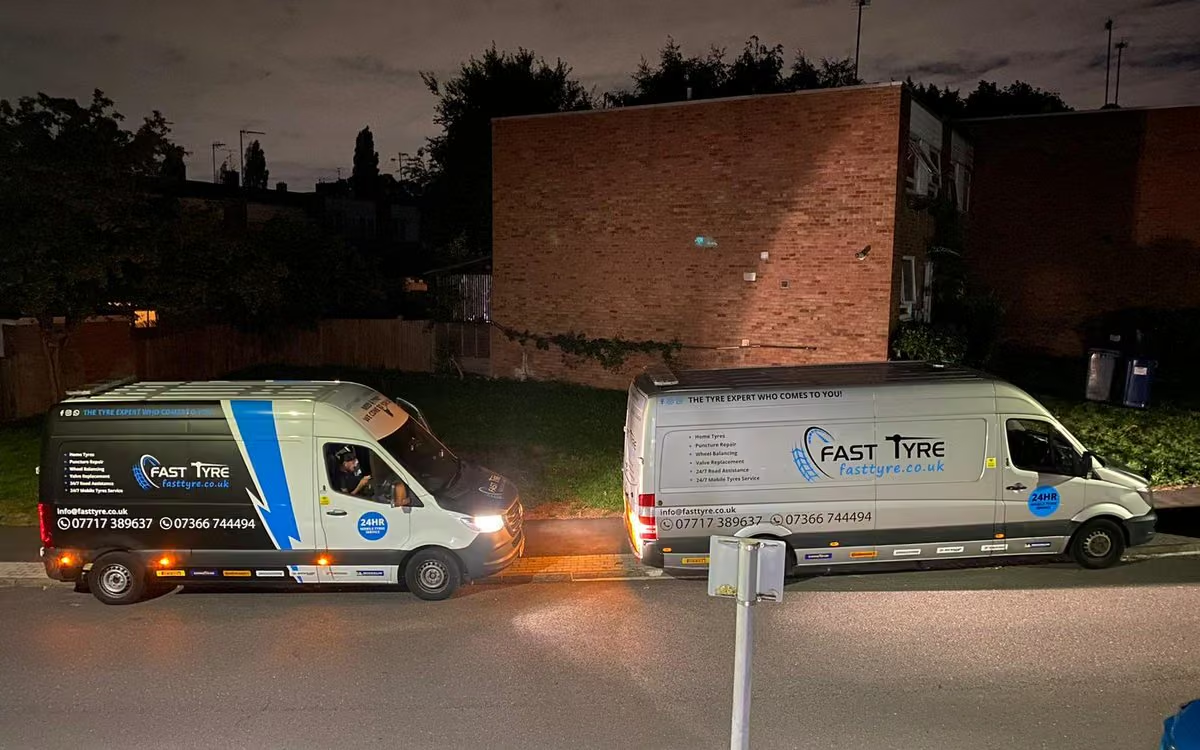
Emergency Tyre Repair in Marlow
Urgent puncture calls in Marlow are dealt with where the car has stopped, whether that is a drive in Marlow Bottom, a bay off the High Street or a car park in town, and the priority is reaching you quickly rather than hurrying the work.
Mobile emergency tyre repair across Marlow
Tell us on the call what the clock looks like, a train, a school run, a meeting, and where the damage seems to sit. A nail in the central tread is usually a straightforward internal repair. Anything at the shoulder or in the sidewall is not, and you hear that on the phone rather than after you have waited.
Once we are there it is the full job. The tyre comes off the rim, the liner is inspected from inside, the hole is reamed and closed with a combined plug and patch to BS AU 159, and the wheel is rebalanced and torqued before it goes back on. Being in a hurry moves you up the day's order. It does not take a step out of the repair, because a puncture fixed in a rush is one you meet again on the A404.
An emergency repair should end with a legal car, not a temporary one. That rules out sealant, outside plugs and anything else that gets you moving while leaving the actual damage in place. What it means in practice is that the tyre comes off the rim even when the clock is against us, because the inside is where you find out whether a repair is safe at all. We do that at the car in Marlow Bottom, fit a proper internal plug-patch to British Standard where it qualifies, rebalance and set the pressure. If it fails the inspection, a replacement goes on instead.

What you get with our emergency tyre repair in Marlow
- Tell us the deadline and it changes the priority
- A BS AU 159 repair done at the kerb, the streets off Pound Lane included
- No trip to a garage here, and none in High Wycombe and Maidenhead either
- Across Marlow, an unsafe repair means a replacement instead
- From a small hatchback to a 4x4, the fit is the same
- You get an arrival time, not a window, Marlow and everywhere else in Buckinghamshire
Emergency tyre repair in Marlow is part of our wider puncture repair cover. For emergency tyre repair in Marlow, call 07717 389637 or send us your details for a price.
Local knowledge across Marlow
Mornings in Marlow squeeze through a handful of routes, the bridge over the Thames, the High Street and the junctions onto the A404, so a car that stops at the wrong moment holds up more than its owner. If you are stuck somewhere awkward, say so first when you ring and it is treated that way. If the car is safely on a drive, tell us the hour you need it by and we work to that.
Typical emergency tyre repair jobs in Marlow
Found before the school run
When the nail is in the middle of the tread and the tyre has not been driven on flat, an urgent call is simply the ordinary full repair done earlier in the day. That is the best version, and it is the reason to ring before moving the car rather than after.
Nail out, patch in, weights moved
A puncture picked up near Higginson Park came out of the central tread and took a combined plug and patch. The wheel then went on the balancer, the old weights were stripped off and new ones went on where the wheel now wanted them, before it went back on the hub.
Torque last, not first
The final step is the nuts, done with a torque wrench to the figure for that car and in the right order across the hub. Even clamping keeps the wheel sitting square against the face, and that matters to how the car feels every bit as much as the balancing does.
What our customers say about our emergency tyre repair
★★★★★ 4.9 · based on 155 Google reviews
Abdul came and helped me as I was stuck on the side of the road. He came very quickly and was so friendly and helpful. Would highly recommend, great service.
Google review
Excellent service, extraordinary job. Amazing man helped me at night. Recommend to everyone.
Google review
Was stuck on a Sunday and needed a new tyre. Very quick response and friendly, helpful fix.
Google review
Emergency Tyre Repair in Marlow, FAQs
Typically 30 to 60 minutes, at any hour, and urgent jobs move up the order. If there is a fixed time you are working to, say so on the call so we can be straight about whether we will make it.
Yes. The balancer is part of the kit that comes out, so a repair done on a driveway or in a car park is finished to exactly the same point as one done under a roof.
Better not. Every mile on a soft tyre works the liner against the rim, and that is what turns a repair into a replacement. Stop where it is safe and let the van come to the car.
Not to standard. The rules exist because the only way to be sure the casing is sound is to look at it from the inside, with the tyre dismounted and a proper repair bonded in place.
Longer than shoving a plug in from outside, and that is rather the point. Removal, inspection, preparing the liner, fitting the repair, rebalancing and torquing all happen, and none of them is worth skipping.
Emergency Tyre Repair in Marlow, 24/7
Prefer a callback? Send your details for an emergency tyre repair price in Marlow.