
Flat Tyre Help in Hoxton
A surprising number of calls start with somebody who is not sure.
Mobile flat tyre help across Hoxton
The car felt odd over the speed bumps along Pitfield Street, the tyre looks a bit low, and they cannot tell whether it is a puncture or their imagination. So here is how to find out with no tools at all.
Crouch down at the front of the car and look at both tyres on that axle together. A tyre with a problem sits differently. The bottom spreads out and bulges where it meets the road, and the gap between the top of the tyre and the wheel arch drops on that side. If one looks fatter at the bottom than its opposite number, that is not your imagination. The other thing worth knowing is that the correct pressure is written on a plate in the driver's door shut, or sometimes inside the fuel flap, and it is often different front to rear. Comparing one tyre against another is a reasonable field test, but the plate is the only thing that gives you the actual number, and if the whole car is low then comparing tells you nothing at all. Either way, if a tyre looks wrong in N1, stop using it and ring.
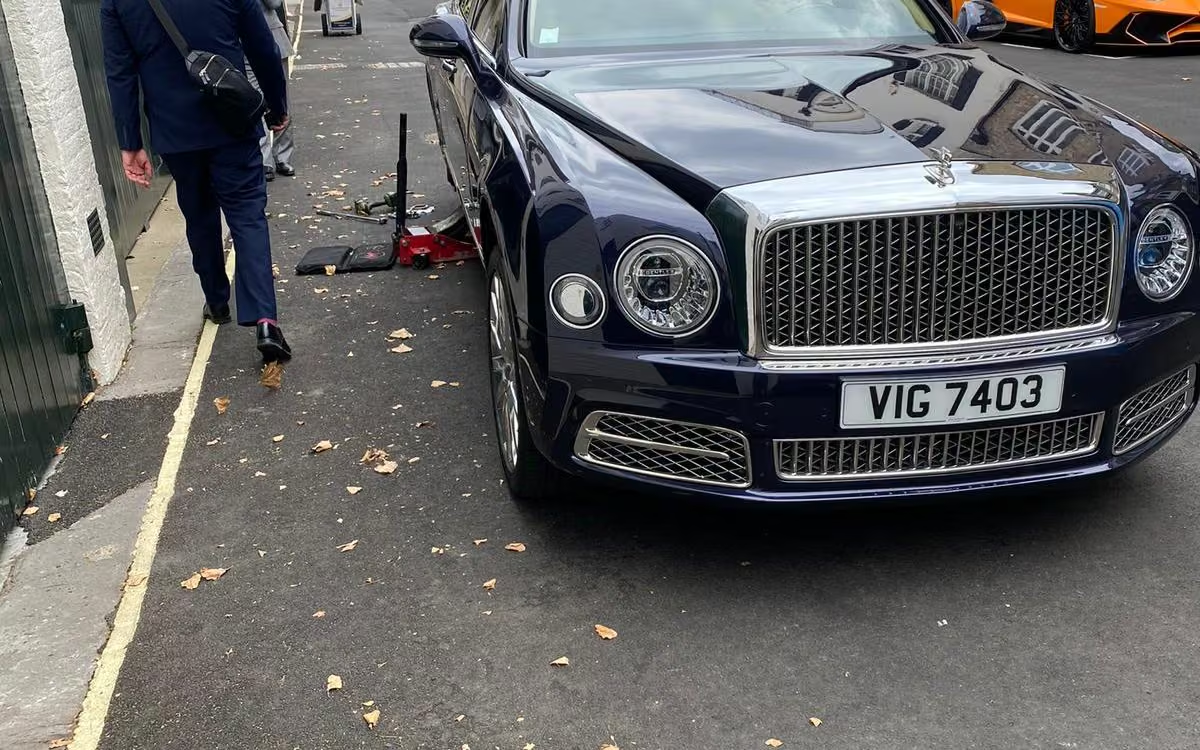
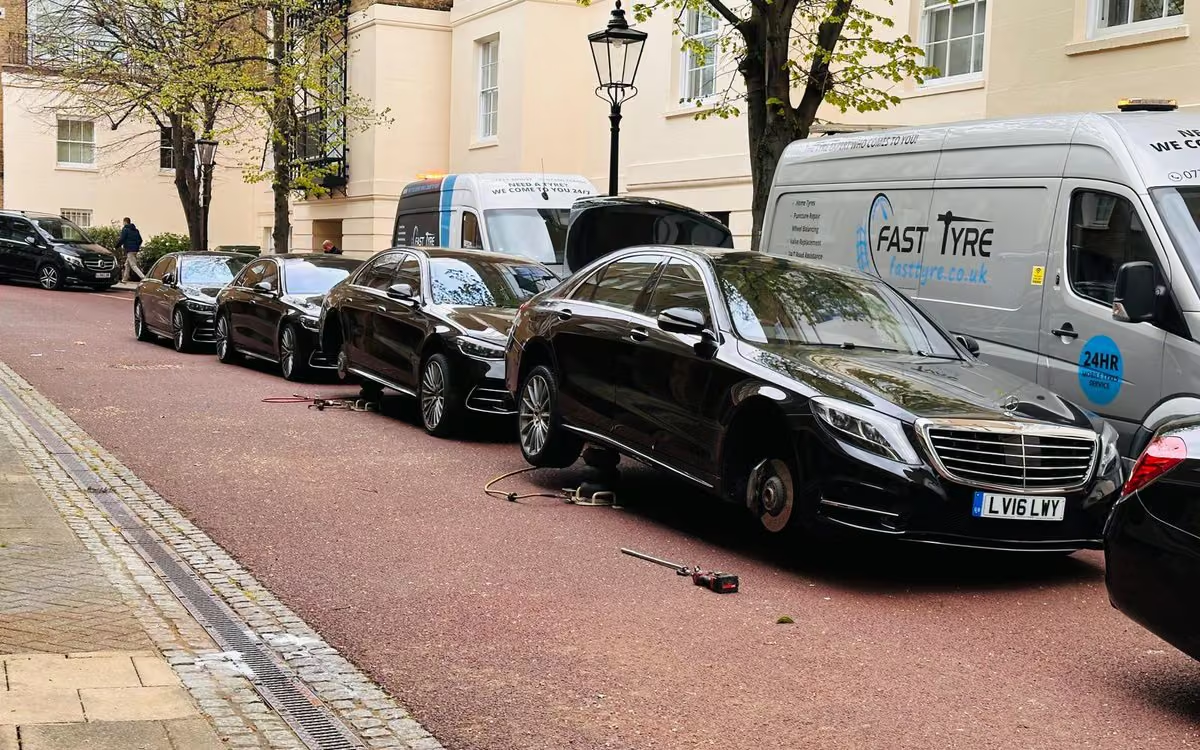
Flat tyres in N1 come in from every direction: a screw picked up on Hoxton Street, a valve that has given up overnight, a kerb strike that has let the bead go. The response does not change. Somebody comes to where the car is, takes the wheel off and gets eyes on the real damage before anything is decided, because that is the only way to separate a repairable puncture from a tyre that is finished. Where a repair is safe it is done to standard on the spot. Where it is not, a replacement comes off the van and goes straight on. You do not end up stranded, and you do not end up paying a recovery firm to move the car for you.
What you get with our flat tyre help in Hoxton
- Give us the Greater London address and we come to it
- One visit, one answer, no going away to think about it
- DVSA-compliant repairs to BS AU 159 where safe
- No second trip to Hoxton; the replacement travels with the fitter
- Car, SUV or 4x4, we carry the sizes for all three
- Tap to pay at the car once the wheel is back on, near Pitfield Street or at home
Flat tyre help in Hoxton is part of our wider puncture repair cover. For flat tyre help in Hoxton, call 07717 389637 or send us your details for a price.
Local knowledge across Hoxton
Hoxton is speed bumps, patched surfaces and cars parked tight into permit bays and estate parking, which is the combination that produces slow quiet punctures rather than dramatic ones. That is why so many get noticed as a tyre that simply looks a bit wrong. Trust the instinct. Crouch down, compare it with the other side, and if there is any doubt at all, leave the car in its bay and ring rather than driving out onto the Kingsland Road to find out.
Typical flat tyre help jobs in Hoxton
Not sure on Hoxton Street
He thought it might be flat and felt faintly silly ringing about it. It was flat, with a screw through the tread. Nobody has ever been embarrassed by a call that turned out to be a genuine puncture.
All four were low
The car had not had its pressures looked at in a very long time, so comparing one tyre against another told the owner nothing. The plate in the door shut settled it. One had a nail in it and the other three were simply neglected.
Looked fine, was not
A wide low profile tyre in an estate bay near Charles Square barely changed shape even well down on pressure. Those hide a flat better than anything else on the road. Crouching down and comparing sides was what gave it away.
What our customers say about our flat tyre help
★★★★★ 4.9 · based on 155 Google reviews
Honestly wish I could give more than 5 stars! Last night after leaving Wembley we got a flat tyre, stranded 2 hours from home, and these guys got us back up and running. 10/10 service from start to finish, even at 1am!
Google review
Abdul was super quick getting to me, literally within 30 minutes, and super quick sorting my car out. Very polite and checked I was OK. Highly recommend.
Google review
Said is a very competent and courteous professional. Have used him several times with different challenges and never been disappointed.
Google review
Flat Tyre Help in Hoxton, FAQs
Crouch at the front or the back of the car and compare the two tyres on that axle. The soft one spreads out at the bottom and sits lower in the arch. It is far easier to see from low down than from standing height.
On a plate in the driver's door shut, sometimes inside the fuel flap, and in the handbook. It usually lists front and rear separately, and often a higher figure again for a fully loaded car.
Yes. Low means air is leaving and the only question is how fast. Driving on it turns a possible repair into a certain replacement, so around Hoxton, where we are minutes away, it is not a gamble worth taking.
It is worth us doing, and we check them as a matter of course before leaving. Underinflated tyres wear badly, use more fuel and handle worse, and most cars we see have at least one that is down.
Yes, and that is where a lot of the N1 work happens. Tell us which block or which bay and whether anything is double parked alongside, and we bring the kit to the car.
Flat Tyre Help in Hoxton, 24/7
Prefer a callback? Send your details for a flat tyre help price in Hoxton.