
Key takeaways
- A tyre that looks low after a long stay is not always punctured. Pressure falls as temperature falls, and a cold snap alone can do it.
- Check all four before deciding. One low tyre is a puncture; four evenly low tyres is usually the weather.
- Long-stay car parks are often off-site with a shuttle, so tell whoever you call which car park, not just which airport.
- Do not drive to the terminal or the motorway on a flat. A short drive on a deflated tyre destroys it and can damage the wheel.
There is a particular flavour of bad news that only happens at an airport. It is late, everyone is tired, the shuttle has just dropped you at a row of cars in the dark, and yours is sitting noticeably lower on one corner than the other three. The luggage is in your hands and the motorway home is forty minutes away.
Before you assume the worst, there is one check worth doing, because a decent share of these turn out not to be punctures at all.
Is the tyre punctured or just cold?
Look at all four tyres before you look at one. Air contracts as it cools, so a car that sat through a cold snap can read low on every corner without anything being wrong with it. A single tyre visibly lower than the other three is a puncture. Four tyres that all look slightly soft, in weather that turned while you were away, is usually just physics.
The distinction matters because the two situations have completely different answers. Evenly low tyres need air, which you can usually get at the car park or the first services. A single flat tyre needs a repair or a replacement, and no amount of pumping will hold it for the drive home.
| What you see | Most likely | What to do |
|---|---|---|
| One tyre flat or clearly lower than the rest | Puncture or valve failure | Do not drive on it. Spare, repair or replacement. |
| All four slightly low, cold weather | Temperature drop | Inflate to the door-pillar figures and recheck. |
| One tyre flat, others fine, car sat 3+ weeks | Slow puncture that finally emptied | Look for a nail before assuming the valve. |
| Tyre holds air but the car pulls or thumps | Possible flat spot from long standing | Usually eases with a few miles. If it does not, get it checked. |
| Bulge or split in the sidewall | Structural damage | Not repairable. Do not drive on it at all. |
If the car has been standing for several weeks and drives oddly for the first mile or two without being flat, that is a separate and usually harmless phenomenon covered in flat spots from long parking.
Why do tyres go down in long-stay parking?
Because a long stay gives a slow leak the time it needs. A tyre that loses a small amount of pressure a day is invisible over a weekend and unmistakable over a fortnight, so airport parking is where a lot of slow punctures finally announce themselves. Nothing has necessarily gone wrong while you were away; it went wrong on the drive there.
The usual suspects:
- A nail or screw picked up on the way to the airport, sealing well enough to survive the journey and leaking steadily afterwards.
- A perished valve, which leaks slowly and constantly and leaves nothing to find in the tread.
- Bead corrosion on an older alloy, letting air past where the tyre meets the rim.
- Temperature, which is not a fault at all, and which explains far more airport flats than people expect.
What to tell whoever you call
Name the car park, not just the airport. Long-stay parking is frequently a separate site several miles from the terminal, reached by shuttle bus, and the difference between the terminal and an off-site car park is the difference between someone finding you and someone driving around in the dark. The car park operator's own name and the postcode on your booking confirmation are the two most useful things you have.
Have ready:
- The car park name and postcode from your booking email, plus the zone or row if it is marked.
- Your registration and the tyre size from the sidewall.
- Whether there is a spare, a space-saver, or only a sealant kit.
- Whether the car park has a barrier and what its hours are, since some off-site sites are gated overnight.
The barrier question is the one people forget, and it is worth asking the operator directly. A gated site that closes to non-shuttle traffic at night is a genuine obstacle, and it is far better discovered on the phone than by someone sitting outside it.
What if it happens on the way to the airport?
Then the clock is the problem, not the tyre, and the honest advice is to make one decision quickly rather than three slowly. Work out whether you can still make the flight with a wheel change, and if the answer is genuinely no, stop trying to solve the tyre and solve the journey instead.
A few things make that decision easier when you are standing on a verge with a suitcase:
- A space-saver has a speed limit, usually 50mph, and it applies on the motorway too. Factor the slower run into whether the flight is still realistic.
- Leaving the car where it is has consequences. A car abandoned on a verge or in a lay-by for two weeks may be removed. If you leave it, tell someone, and do not leave it on a motorway.
- Airport drop-off is not a repair bay. Do not plan to limp in on a flat and deal with it on return, because the tyre will be beyond repair and the wheel may be too.
- If you are on a motorway, safety comes before the flight. National Highways guidance is to go left, get out on the side away from traffic, get behind the barrier and call for help on 0300 123 5000. If you cannot get out of the car safely, stay in it, keep your seatbelt on and call 999.
Missing a flight is expensive. Standing on a hard shoulder to save it is a different order of expensive, and the guidance exists because that trade has gone wrong for people before.
Getting home tonight
If you have a full-size spare and the energy to fit it, that is the fastest route home. If you have a space-saver, fit it and respect its speed limit for the whole journey, including the motorway. If you have a sealant kit, it will only help with a small puncture in the tread, and it will do nothing at all for a sidewall or a failed valve.
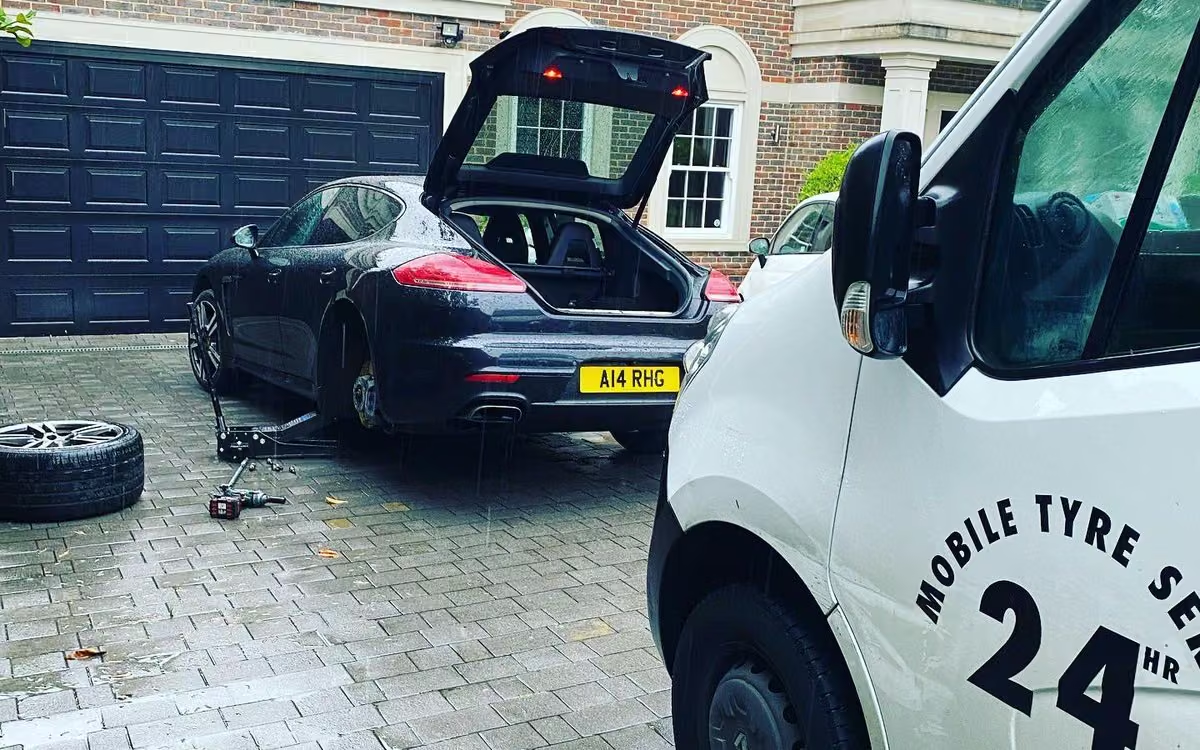
If none of those apply, the tyre has to come to the car. That is the situation this service exists for, and an airport car park is a straightforward place to work in: level ground, lighting and no live traffic.
We come to the car with the tyre, the machine and the balancer, so you drive home rather than wait for a garage to open. Give us the car park name and postcode from your booking and the size off the sidewall. Typically 30 to 60 minutes across London and the nearer Home Counties, longer further out, and you get a real arrival time on the call.
If the tyre is holding air and you are deciding whether it is safe for the run home, this covers where that line sits. For the longer view, the pre-journey checklist is the thing that stops this happening on the outbound leg, and 24-hour emergency callout explains how out-of-hours works.
Frequently asked questions
A slow leak that is invisible over a weekend becomes obvious over a fortnight. Most airport flats started as a nail picked up on the drive there, or a perished valve. Cold weather alone can also drop pressure on all four without any fault at all.
Usually yes, and airport car parks are easy to work in. The thing to get right is which car park: long-stay is often an off-site location miles from the terminal, so give the operator name and the postcode from your booking rather than the airport name.
No. Even a short drive on a deflated tyre wrecks the inner sidewall and can damage the wheel rim, turning a repairable puncture into a new tyre and possibly a new wheel. Fit the spare or have a tyre brought to the car.
Unlikely. Four evenly low tyres after a cold spell is normally just air contracting as it cools. Inflate to the figures on the door-pillar plate while the tyres are cold and recheck. One tyre lower than the rest is the one to worry about.
Ask the operator before anyone travels. Some off-site long-stay car parks restrict access to shuttle traffic at night, which stops a fitting van getting to you. It is a two-minute phone call that saves someone a wasted journey and you a longer wait.